
- For research purpose only
- Made in the USA
- Major Credit Cards Accepted
- Third Party Tested
- For research purpose only
- Made in the USA
- Major Credit Cards Accepted
- Third Party Tested
- For research purpose only
- Made in the USA
- Major Credit Cards Accepted
- Third Party Tested
- For research purpose only
- Made in the USA
- Major Credit Cards Accepted
- Third Party Tested
- Home
- /
- Growth Factor / Endocrine Research
- /
- Tesamorelin / Ipamorelin
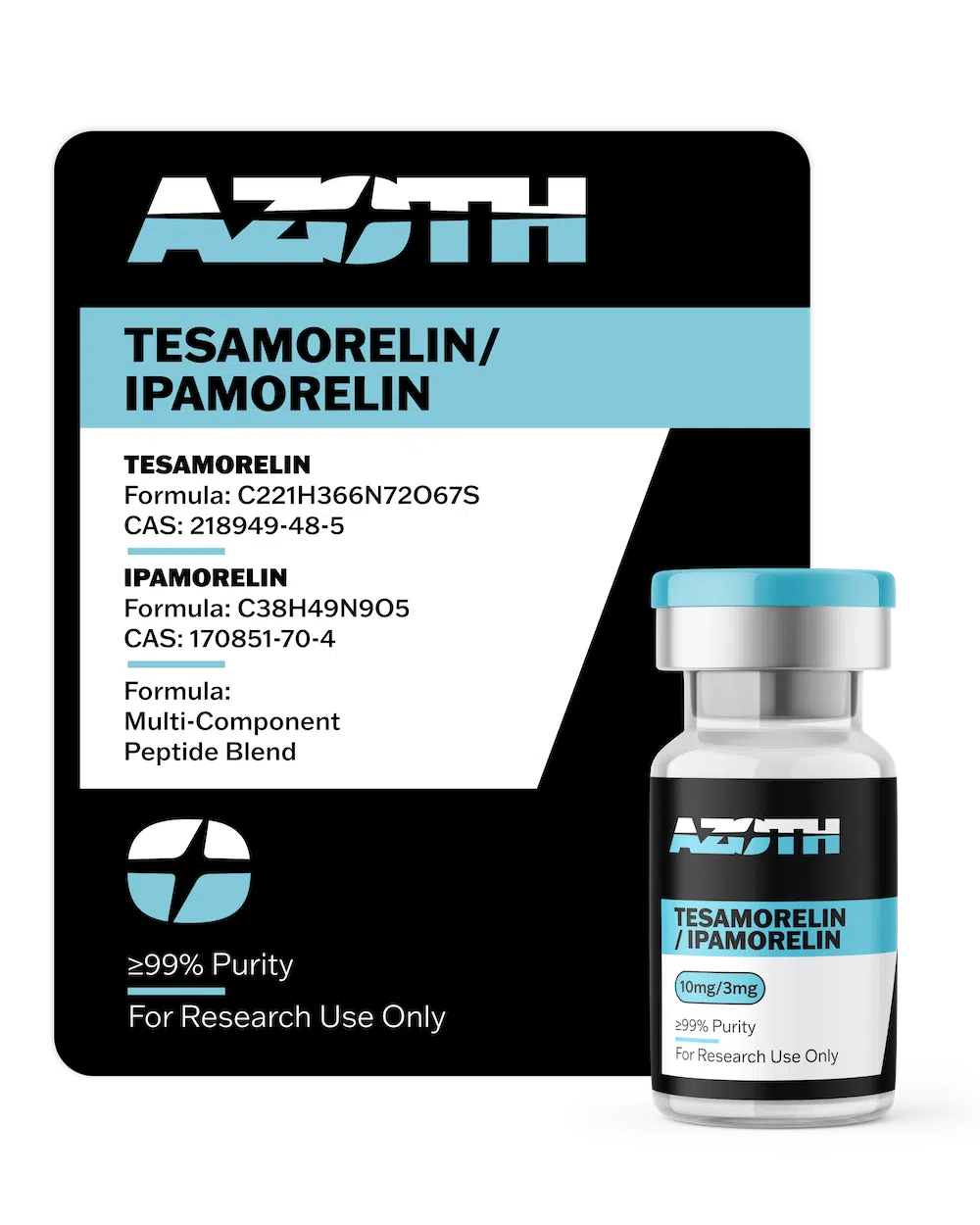
SKU
AZ-TESAIPA-103
Tesamorelin / Ipamorelin
Pricing
Out of stock
Fulfillment Timing Based on Inventory and Account Status.
Tesamorelin / Ipamorelin
HPLC Certified
CAS #
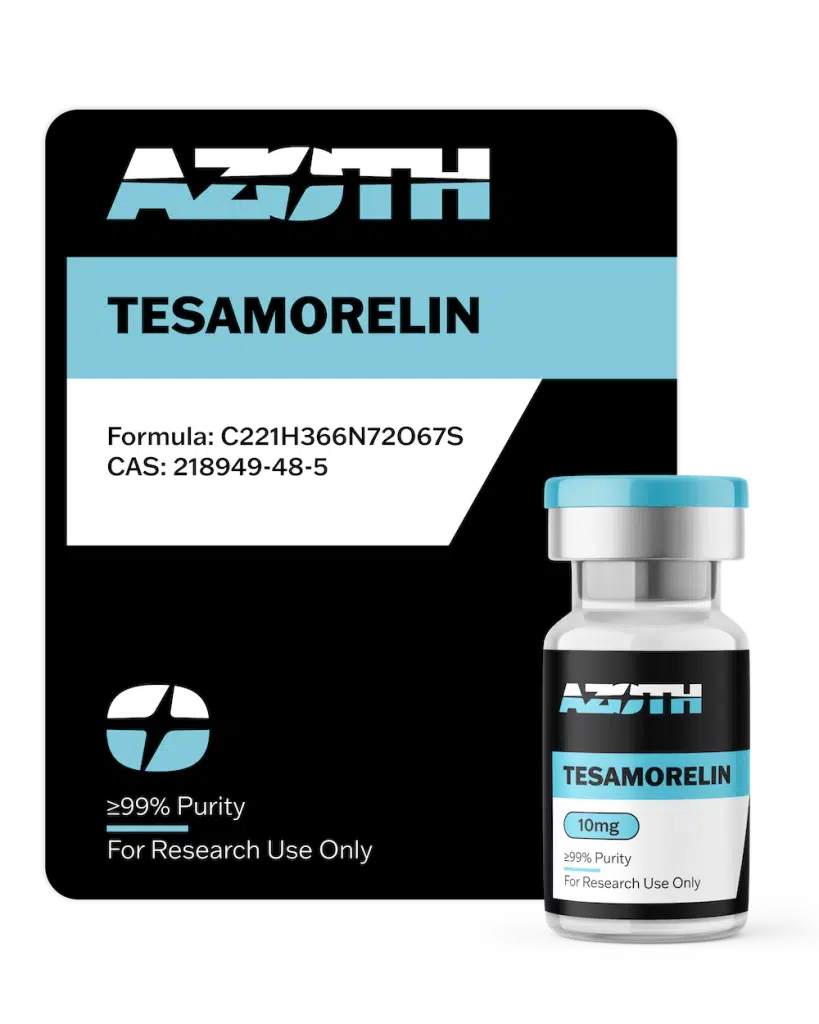
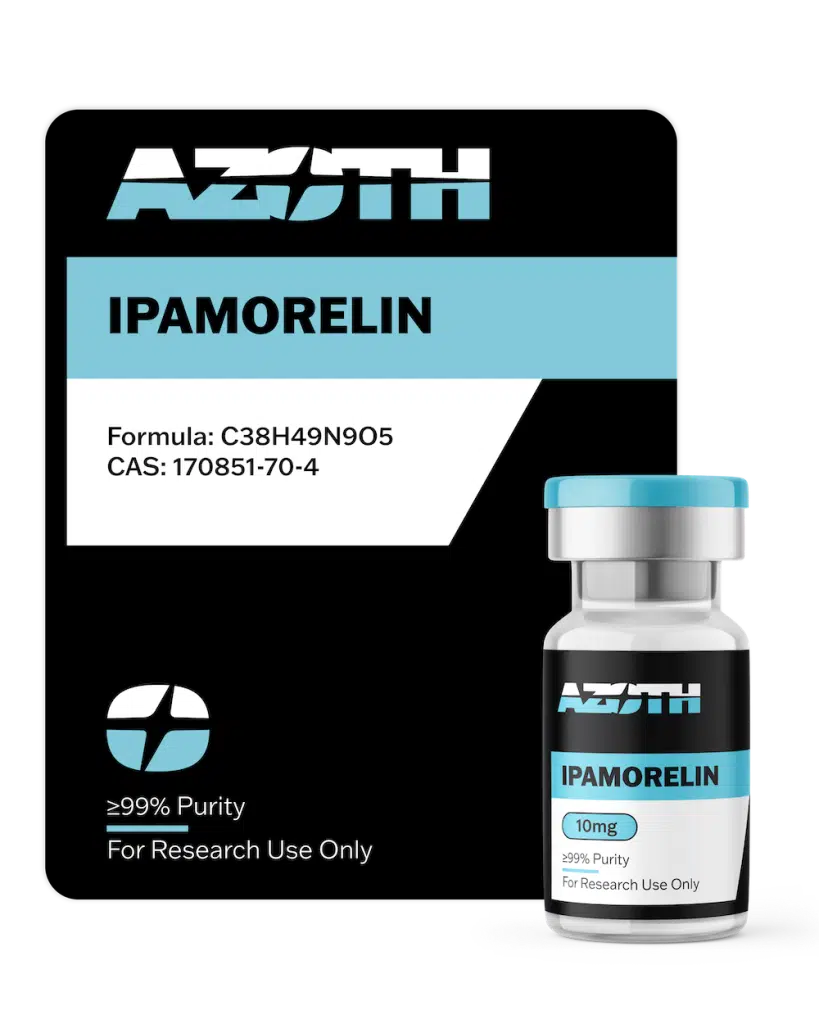
218949-48-5 / 170851-70-4
M.W.
5135.9 / 711.85
Formula
Multi-Component Peptide Blend
- PURITY
- ≥99%
RUO
- (Research Use Only)
Specs:
- Amount: 10mg/3mg | Format: Lyophilized Powder | Container: 3mL Vial | Storage: 2-8°C | Type: Single Peptide | Research Alias: TESA/IPA Blend | Blend Breakdown: Tesamorelin 10mg + Ipamorelin 3mg | Research Category: Peptide Receptor Pathway Research
What Is the Tesamorelin / Ipamorelin Blend?
The Tesamorelin / Ipamorelin blend pairs two synthetic peptides that act on the somatotropic axis through two separate receptors. Tesamorelin is a 44-amino-acid analog of human growth hormone-releasing hormone (GHRH), modified with a trans-3-hexenoyl group at the N-terminus to slow enzymatic degradation relative to the native hormone. Ipamorelin is a synthetic pentapeptide with the sequence Aib-His-D-2-Nal-D-Phe-Lys-NH2 that binds the growth hormone secretagogue receptor (GHSR-1a), the same receptor recognized by endogenous ghrelin.
The two compounds are studied together because they converge on the same pituitary cell population from different upstream receptors. That structure makes the pairing a frequent reference combination in receptor-pathway research, ligand-receptor interaction studies, and comparative peptide evaluation. Tesamorelin has one of the larger published literature bases of any GHRH analog, and ipamorelin was characterized in 1998 as the first growth hormone secretagogue in its class to show a receptor selectivity profile comparable to GHRH itself.
AZOTH supplies this blend as a lyophilized powder at 99%+ HPLC-verified purity, with lot-specific certificate of analysis documentation, intended exclusively for licensed researchers and laboratory professionals. This product is supplied for laboratory research and analytical use only. It is not for human use, veterinary use, diagnostic use, or administration of any kind.
Product Specifications
- SKU: AZ-TESAIPA-103
- Blend breakdown: Tesamorelin 10mg + Ipamorelin 3mg
- Container: 3mL vial, lyophilized powder
- CAS: 218949-48-5 (Tesamorelin) / 170851-70-4 (Ipamorelin)
- Molecular weight: 5135.9 g/mol (Tesamorelin) / 711.85 g/mol (Ipamorelin)
- Molecular formula: C221H366N72O67S (Tesamorelin) / C38H49N9O5 (Ipamorelin)
- Purity: ≥99% by HPLC
- Storage: 2-8°C
- Research category: Growth Factor / Endocrine Research, Peptide Receptor Pathway Research
How Does the Tesamorelin / Ipamorelin Blend Work? Two Receptor Pathways Studied
Neither compound in this blend acts through a single shared mechanism. The published literature describes two distinct receptor systems that both terminate at the somatotroph, which is the reason the combination appears so often in comparative receptor studies.
GHRH Receptor Signaling
Tesamorelin binds the GHRH receptor on pituitary somatotrophs, a class B G-protein-coupled receptor that signals through adenylate cyclase and cyclic AMP. The trans-3-hexenoyl modification at the N-terminus extends the molecule’s stability against dipeptidyl peptidase-4 cleavage compared with native GHRH 1-44. Published pharmacodynamic work in healthy adult volunteers reported that the analog acts on endogenous pulse architecture rather than producing a flat elevation, with feedback regulation left intact.
Ghrelin Receptor (GHSR-1a) Activation
Ipamorelin binds GHSR-1a and signals through the phospholipase C and inositol triphosphate cascade, a pathway separate from the cyclic AMP route used by GHRH. In the original characterization work, ipamorelin released growth hormone from primary rat pituitary cells with potency and efficacy comparable to GHRP-6, and pharmacological profiling with GHRP and GHRH antagonists confirmed that the effect runs through a GHRP-like receptor rather than the GHRH receptor.
Receptor Selectivity Profile
The 1998 characterization study in conscious swine reported that ipamorelin did not measurably alter plasma FSH, LH, prolactin, or TSH at the doses tested, and did not raise ACTH or cortisol above levels seen after GHRH stimulation. GHRP-2 and GHRP-6 both raised ACTH and cortisol in the same model. This selectivity is the property most often cited in studies that use ipamorelin as an isolating tool for somatotropic pathway research.
Downstream IGF-1 Axis Activity
Growth hormone released through either receptor pathway acts on hepatic and peripheral tissue via the growth hormone receptor and the JAK2-STAT5 cascade, driving IGF-1 transcription. Animal work with ipamorelin has documented dose-dependent effects on longitudinal bone growth rate and body weight gain in adult female rats without measurable change in total IGF-I, IGFBPs, or serum markers of bone turnover, which points to mechanisms not fully accounted for by circulating IGF-1 alone.
Pancreatic and Enteric Receptor Activity
GHSR-1a is expressed outside the pituitary, including in pancreatic tissue and the enteric nervous system. Rodent work has examined ipamorelin-evoked insulin release from pancreatic tissue in normal and diabetic models, and separate rodent studies have looked at gastric motility endpoints in postoperative ileus models.
Related
Buy the Tesamorelin / Ipamorelin Blend for These Research Applications
Somatotropic Axis and Pulse Architecture Research
The central research use of this pairing is the study of how two upstream receptors interact at a shared downstream target. Published work in healthy men examined the effect of a GHRH analog on endogenous growth hormone pulsatility and insulin sensitivity, reporting changes in pulse characteristics rather than a simple additive elevation. Investigators studying receptor crosstalk, desensitization behavior, and pulse-frequency modeling use GHRH-analog and GHSR-agonist pairings for exactly this reason.
Adipose Tissue and Hepatic Lipid Research
Tesamorelin carries the larger published data set on visceral adipose and hepatic lipid endpoints of any GHRH analog. A pooled analysis of two multicenter, double-blind, placebo-controlled phase 3 trials examined visceral adipose tissue and lipid parameters over 52 weeks in a study population with excess abdominal fat. A separate randomized, double-blind, multicenter trial measured hepatic fat fraction by proton magnetic resonance spectroscopy and reported an absolute effect size of -4.1% versus placebo at 12 months. These findings define a research category, not a product claim.
Skeletal Tissue and Bone Formation Research
Ipamorelin has a rodent literature base focused on bone endpoints. Adult female Sprague-Dawley rats given ipamorelin continuously by osmotic minipump for 12 weeks showed increased total tibial and vertebral bone mineral content by in vivo DXA, with peripheral quantitative computed tomography attributing the change to increased cross-sectional bone area rather than altered volumetric bone mineral density. A separate rat model examined whether ipamorelin counteracts glucocorticoid-induced reduction in bone formation.
Neuroendocrine and Cognitive Pathway Research
A randomized, double-blind, placebo-controlled trial published in Archives of Neurology examined GHRH administration over 20 weeks in adults with mild cognitive impairment and in healthy older adults, with cognitive testing, mood, sleep, insulin sensitivity, and serum IGF-I as measured endpoints. The trial authors called for larger and longer-duration studies before conclusions are drawn. This remains an open research category.
Gastrointestinal Motility Research
GHSR-1a agonism has been studied in enteric contexts separate from the pituitary. Rodent work has assessed ipamorelin as a ghrelin mimetic against gastric dysmotility endpoints in postoperative ileus models, and a randomized proof-of-concept study examined the same question in a bowel resection population.
Comparative Peptide and Analytical Method Research
Because tesamorelin and ipamorelin differ sharply in size, sequence class, and receptor target, the blend is used in analytical settings for peptide characterization, reconstitution and stability assessment, assay development, chromatographic method validation, and mass spectrometry reference work. Metabolite detection methods for growth hormone releasing peptides in urine have been published in the analytical toxicology literature.
Research Summary: What the Published Literature Shows
The literature on these two compounds is uneven in a way researchers should account for before designing a study. Tesamorelin has a large controlled clinical trial base built across phase 3 programs and investigator-initiated trials. Ipamorelin’s data set is predominantly rodent and swine, with human evidence limited to pharmacokinetic and pharmacodynamic work and a small number of trials. There is no published controlled trial of the two compounds administered as a fixed combination. Below is a summary of the documented research areas for each compound individually.
| Research Area | Compound | Model | Key Findings |
| Visceral adipose tissue | Tesamorelin | Pooled phase 3, human | Reduction in visceral adipose tissue maintained through 52 weeks, with subcutaneous adipose tissue preserved. |
| Hepatic fat fraction | Tesamorelin | Randomized, double-blind, multicenter | Absolute effect size of -4.1% versus placebo at 12 months by MR spectroscopy; 35% of the treatment arm reached hepatic fat fraction below 5% versus 4% on placebo. |
| GH pulsatility and insulin sensitivity | Tesamorelin | Healthy adult men | Effects on endogenous pulse architecture with feedback regulation retained. |
| Cognitive endpoints | GHRH / Tesamorelin | Randomized controlled trial, MCI and healthy older adults | Measured effects on executive function testing over 20 weeks; authors called for larger, longer trials. |
| Receptor selectivity | Ipamorelin | Rat pituitary cells, anaesthetised rats, conscious swine | GH release comparable to GHRP-6 with no measurable change in FSH, LH, prolactin, or TSH, and no ACTH or cortisol elevation beyond GHRH reference. |
| Longitudinal bone growth | Ipamorelin | Adult female rats, 15 days | Dose-dependent increase in longitudinal growth rate from 42 to 52 µm/day; total IGF-I, IGFBPs, and bone turnover markers unchanged. |
| Bone mineral content | Ipamorelin | Adult female Sprague-Dawley rats, 12 weeks | Increased tibial and vertebral BMC by DXA; pQCT attributed the gain to increased bone dimensions rather than volumetric density. |
| Glucocorticoid-induced bone loss | Ipamorelin | Adult rats | Examined as a counteragent to steroid-associated reduction in bone formation. |
| Pancreatic insulin release | Ipamorelin | Normal and diabetic rat pancreas | Mechanism of ipamorelin-evoked insulin release characterized. |
| Gastric motility | Ipamorelin | Rodent postoperative ileus model | Gastric dysmotility endpoints assessed for a ghrelin mimetic. |
| Pharmacokinetics | Ipamorelin | Human volunteers | PK/PD modeling published in 1999. |
A regulatory note for researchers reviewing this literature: a prescription pharmaceutical formulation of tesamorelin is approved in the United States for a specific indication. That approved drug product is a separate, regulated pharmaceutical and is not the material sold here. AZOTH supplies research-grade compound for laboratory use only. Nothing in the cited literature describes or authorizes any use of AZOTH material outside a qualified research environment.
Why Researchers Choose the Tesamorelin / Ipamorelin Blend from AZOTH
Blend products introduce a verification problem that single-compound vials do not. A two-peptide fill has to be confirmed for identity, ratio, and purity of both components, not just one. AZOTH documents each lot accordingly.
- Verified 99%+ purity by HPLC
- USA-manufactured under controlled quality protocols
- Third-party tested for identity, purity, and stability
- Lot-specific certificate of analysis available for every batch
- Documented blend ratio: Tesamorelin 10mg + Ipamorelin 3mg per vial
- Lyophilized powder format for shelf stability
- Controlled sourcing with chain-of-custody documentation
Whether the work involves receptor pathway comparison, analytical method development, or preclinical somatotropic axis models, AZOTH supplies material with the documentation a laboratory record requires.
Storage and Handling
The Tesamorelin / Ipamorelin blend is supplied as a lyophilized (freeze-dried) powder in a 3mL vial. Store at 2-8°C in a cool, dry environment away from direct light and moisture. After reconstitution with bacteriostatic water, keep refrigerated and use in accordance with your laboratory research protocol. Stability is maintained for up to 24 months when stored correctly in lyophilized form. Avoid repeated freeze-thaw cycles and vigorous agitation during reconstitution, since both peptides are subject to physical degradation under mechanical stress.
Legal Disclaimer
The Tesamorelin / Ipamorelin blend sold by AZOTH is intended for laboratory and in vitro research use only. It is not approved by the Food and Drug Administration (FDA) for human consumption, medical use, diagnostic procedures, or veterinary use. This product has not been evaluated by the FDA and is not intended to diagnose, treat, cure, or prevent any disease or medical condition. Bodily introduction of any kind into humans or animals is strictly prohibited by law. AZOTH is not a compounding pharmacy, a 503A facility, or a 503B outsourcing facility. All purchasers must be licensed researchers or qualified laboratory professionals. By purchasing this product, you acknowledge that you are aware of the applicable regulations in your jurisdiction and that you will use this compound exclusively within a qualified research environment.
| Research Findings | Journal | Data | Source Link |
| 1. Falutz J, et al. “Metabolic effects of a growth hormone-releasing factor in patients with HIV.” | N. Engl. J. Med. | 2007; 357(23):2359-2370. | https://pubmed.ncbi.nlm.nih.gov/18057338/ |
| 2. Falutz J, et al. “Effects of tesamorelin (TH9507), a growth hormone-releasing factor analog, in human immunodeficiency virus-infected patients with excess abdominal fat: a pooled analysis of two multicenter, double-blind placebo-controlled phase 3 trials with safety extension data.” |
J. Clin. Endocrinol. Metab. | 2010; 95(9):4291-4304. | https://pubmed.ncbi.nlm.nih.gov/20554713/ |
| 3. Stanley TL, et al. “Effects of a growth hormone-releasing hormone analog on endogenous GH pulsatility and insulin sensitivity in healthy men.” |
J. Clin. Endocrinol. Metab. | 2011; 96(1):150-158. | https://pubmed.ncbi.nlm.nih.gov/20943777/ |
| 4. Stanley TL, et al. “Effects of tesamorelin on non-alcoholic fatty liver disease in HIV: a randomised, double-blind, multicentre trial.” |
Lancet HIV | 2019; 6(12):e821-e830. | https://pubmed.ncbi.nlm.nih.gov/31611038/ |
| 5. Baker LD, et al. “Effects of growth hormone-releasing hormone on cognitive function in adults with mild cognitive impairment and healthy older adults: results of a controlled trial.” |
Arch. Neurol. | 2012; 69(11):1420-1429. | https://pubmed.ncbi.nlm.nih.gov/22869065/ |
| 6. Raun K, et al. “Ipamorelin, the first selective growth hormone secretagogue.” | Eur. J. Endocrinol. | 1998; 139(5):552-561. | https://pubmed.ncbi.nlm.nih.gov/9849822/ |
| 7. Johansen PB, et al. “Ipamorelin, a new growth-hormone-releasing peptide, induces longitudinal bone growth in rats.” |
Growth Horm. IGF Res. | 1999; 9(2):106-113. | https://pubmed.ncbi.nlm.nih.gov/10373343/ |
| 8. Svensson J, et al. “The GH secretagogues ipamorelin and GH-releasing peptide-6 increase bone mineral content in adult female rats.” |
J. Endocrinol. | 2000; 165(3):569-577. | https://pubmed.ncbi.nlm.nih.gov/10828840/ |
| 9. Andersen NB, et al. “The growth hormone secretagogue ipamorelin counteracts glucocorticoid-induced decrease in bone formation of adult rats.” |
Growth Horm. IGF Res. | 2001; 11(5):266-272. | https://pubmed.ncbi.nlm.nih.gov/11735244/ |
| 10. Adeghate E, Ponery AS. “Mechanism of ipamorelin-evoked insulin release from the pancreas of normal and diabetic rats.” |
Neuro Endocrinol. Lett. | 2004; 25(6):403-406. | https://pubmed.ncbi.nlm.nih.gov/15665799/ |
| 11. Greenwood-Van Meerveld B, et al. “Efficacy of ipamorelin, a ghrelin mimetic, on gastric dysmotility in a rodent model of postoperative ileus.” |
J. Exp. Pharmacol. | 2012; 4:149-155. | https://pubmed.ncbi.nlm.nih.gov/27186127/ |
| 12. Gobburu JV, et al. “Pharmacokinetic-pharmacodynamic modeling of ipamorelin, a growth hormone releasing peptide, in human volunteers.” |
Pharm. Res. | 1999; 16(9):1412-1416. | https://pubmed.ncbi.nlm.nih.gov/10496658/ |
| 13. Beck DE, et al. “Prospective, randomized, controlled, proof-of-concept study of the ghrelin mimetic ipamorelin for the management of postoperative ileus in bowel resection patients.” |
Int. J. Colorectal Dis. | 2014; 29(12):1527-1534. | https://pubmed.ncbi.nlm.nih.gov/25331030/ |
Featured Research Compounds

Research use only
All AZOTH products are intended solely for laboratory research, analytical, and scientific use. Products are not for human consumption, human use, veterinary use, diagnostic use, therapeutic use, or administration of any kind.