
- For research purpose only
- Made in the USA
- Major Credit Cards Accepted
- Third Party Tested
- For research purpose only
- Made in the USA
- Major Credit Cards Accepted
- Third Party Tested
- For research purpose only
- Made in the USA
- Major Credit Cards Accepted
- Third Party Tested
- For research purpose only
- Made in the USA
- Major Credit Cards Accepted
- Third Party Tested
- Home
- /
- Inflammatory Response Research
- /
- BPC-157 / TB-500
SKU
AZ-WOLV-1010 / AZ-WOLV-3030
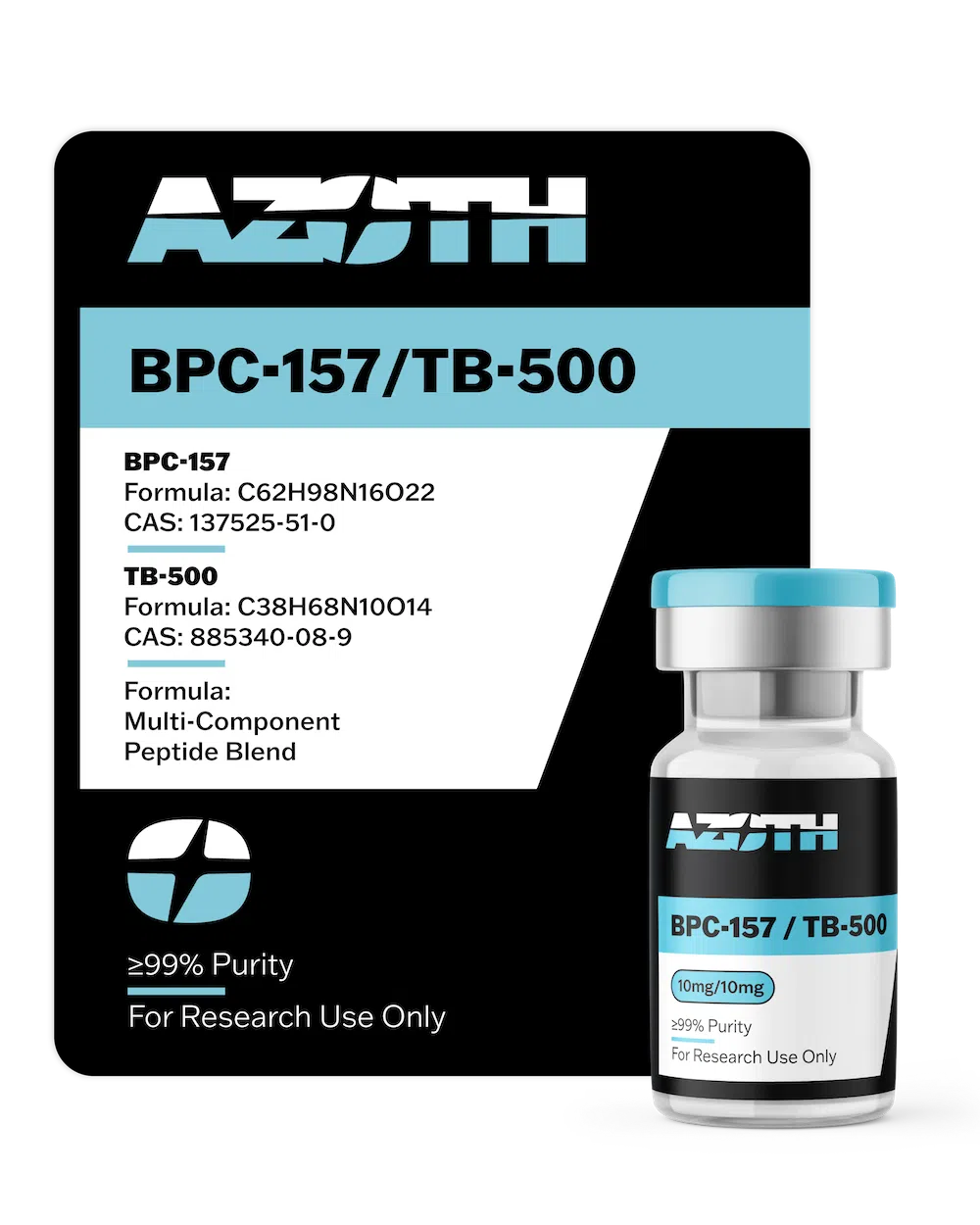
BPC-157 / TB-500
In Stock
.
You save (%)
Fulfillment Timing Based on Inventory and Account Status.
BPC-157 / TB-500
HPLC Certified
CAS #
137525-51-0 / 885340-08-9
M.W.
1,419.55 / 889.01
Formula
Multi-Component Peptide Blend
- PURITY
- ≥99%
RUO
- (Research Use Only)
Specs:
- Amount: 10/10mg / 30/30mg | Format: Lyophilized Powder | Container: 3mL Vial | Storage: 2-8°C | Type: Peptide Blend | Research Alias: BPC/TB Blend | Blend Breakdown: BPC-157 10mg + TB-500 | Research Category: Peptide Blend Research
What Is the BPC-157 & TB-500 Blend?
The BPC-157 & TB-500 Blend combines two of the most extensively studied synthetic peptides in preclinical tissue repair research. BPC-157, short for Body Protection Compound-157, is a stable gastric pentadecapeptide derived from a protein found in human gastric juice and composed of a sequence of 15 amino acids. TB-500 is a synthetic analog of Thymosin Beta-4 (T?4), a naturally occurring 43-amino-acid protein present throughout mammalian cells and recognized as the primary G-actin sequestering peptide in eukaryotic tissue.
Both compounds have accumulated substantial independent bodies of preclinical literature. Animal model studies have documented effects on muscle, tendon, ligament, bone, gastrointestinal tissue, vascular networks, and cardiac tissue for each compound separately. Their distinct and non-overlapping mechanisms have made this combination a subject of active interest in laboratories focusing on tissue repair, wound biology, and cellular regeneration. At Azoth, we supply this blend as a lyophilized powder manufactured to strict purity standards for licensed researchers and laboratory professionals.
How Does BPC-157 Work?
BPC-157 does not operate through a single receptor pathway. Preclinical research describes it as a pleiotropic regulator acting across interconnected biological systems in in vitro and animal model contexts.
Vascular Signaling and New Blood Vessel Formation Research in animal models indicates BPC-157 upregulates Vascular Endothelial Growth Factor Receptor 2 (VEGFR2), sensitizing endothelial cells to circulating growth factors. This VEGFR2-Akt-eNOS signaling cascade promotes new blood vessel formation and endothelial proliferation, with documented effects across musculoskeletal and gastrointestinal preclinical research contexts.
Fibroblast Activity and Collagen Production BPC-157 has demonstrated dose-dependent effects on fibroblast proliferation and migration in both in vitro and in vivo models. By stimulating the FAK-paxillin pathway, it promotes cellular adhesion and movement, both of which are critical steps observed in preclinical wound repair and tissue reconstruction models. This mechanism is associated with increased collagen deposition and extracellular matrix remodeling in treated animal tissues.
Nitric Oxide Homeostasis In animal models, BPC-157 exerts a stabilizing effect on the nitric oxide (NO) system, supporting localized vasodilation while protecting tissues from damage caused by both NO excess and deficiency. This dual regulatory function contributes to the cytoprotective profile observed across gastric, vascular, and neural preclinical studies.
How Does TB-500 Work?
TB-500 engages cellular repair through mechanisms distinct from those of BPC-157, acting at the level of cytoskeletal dynamics and progenitor cell behavior.
Actin Sequestration and Cell Motility The primary mechanism of TB-500 involves binding to monomeric G-actin, the unpolymerized form of actin required for cytoskeletal reorganization during cell movement. By sequestering G-actin, this peptide promotes directed migration of repair cells, including endothelial cells, fibroblasts, and progenitor cells, toward injury sites in in vitro and animal model assays. Researchers have identified a seven amino acid actin-binding motif within T?4 as essential to this angiogenic and migratory activity.
Integrin-Linked Kinase and the Akt Survival Pathway In cardiac and endothelial cell models, TB-500’s parent compound Thymosin Beta-4 has been shown to form a functional complex with PINCH and Integrin-Linked Kinase (ILK), activating the downstream survival kinase Akt. In mouse coronary artery ligation models, this pathway was associated with enhanced early cardiomyocyte survival and improved cardiac function in preclinical studies.
Anti-Inflammatory Signaling Across Tissue Types TB-500 exhibits regulatory effects on inflammatory signaling in animal models. The Thymosin Beta-4 parent compound has been shown to downregulate pro-inflammatory chemokines and cytokines, reduce oxidative markers, and modulate NF-?B activity. In corneal injury models and rat wound-healing assays, these effects have translated to reduced local inflammation without complete suppression of the repair response.
Angiogenesis and Tissue Neovascularization TB-500’s actin-binding domain directly promotes endothelial cell migration, adhesion, tubule formation, and vessel sprouting in in vitro and animal model assays. This mechanism operates through the actin-binding motif rather than via VEGFR2, creating a mechanistically distinct angiogenic profile from BPC-157. Both pathways have been documented independently in the preclinical literature.
Related
BPC-157 & TB-500 Blend: Research Applications
Connective Tissue and Musculoskeletal Research
Connective tissue remains one of the most active areas in the preclinical literature for both compounds. BPC-157 promotes fibroblast density, collagen deposition, and vascular collateralization at tendon and ligament injury sites in rat models. TB-500’s Thymosin Beta-4 parent compound, studied separately in rodent skeletal muscle and Achilles tendon models, has been associated with accelerated tissue regeneration, increased satellite cell proliferation, and improved collagen fiber organization. Researchers have referenced both independently documented mechanisms when examining multi-target approaches to connective tissue repair in laboratory settings.
Wound Healing and Dermal Tissue Research
Both compounds carry independent preclinical track records in dermal wound-healing models. BPC-157 supports healing through angiogenesis promotion, immune cell recruitment, and collagen synthesis, with studies in rat models documenting effects on skin burns and surgical incisions. Thymosin Beta-4 in rat full-thickness wound models increased reepithelialization, wound contraction, collagen deposition, and vessel formation relative to saline controls. Researchers studying dermal wound closure, barrier restoration, and tissue remodeling have cited both compounds in the context of distinct but adjacent cellular mechanisms.
Gastrointestinal Research
BPC-157’s origins in gastric mucosa biology make it the primary compound in GI-focused research within this blend. In vitro and animal studies have explored its role in models of ulcerative colitis, mucosal barrier dysfunction, and gastrointestinal motility. Researchers have observed reduced inflammatory signaling and enhanced epithelial integrity at gut tissue sites in rat colitis models. TB-500’s documented anti-inflammatory properties may offer supporting context in models of gut inflammation, though the body of GI-specific literature centers substantially on BPC-157.
Cardiovascular Preclinical Research
TB-500 is the primary compound in cardiovascular-focused research within this blend. Preclinical studies in mouse and rat cardiac injury models have shown that Thymosin Beta-4 engages the ILK-Akt pathway, supports cardiomyocyte survival under hypoxic conditions, and promotes neoangiogenesis at ischemic sites. BPC-157’s VEGFR2-driven angiogenesis and nitric oxide-stabilizing properties have also been studied in rat ischemia-reperfusion models, providing an additional vascular-level research context. These two compounds approach cardiac-related vascular biology through separate but documented mechanisms.
Ocular and Corneal Tissue Models
Thymosin Beta-4 has a dedicated body of research in corneal and ocular tissue repair, making TB-500 the primary compound in this application area. Preclinical studies in murine alkali-injury corneal models have recorded accelerated reepithelialization, reduced inflammatory cytokine activity, and improved barrier integrity following T?4 administration. Researchers focused on ocular tissue biology should note that the majority of corneal research cited in this area was conducted using the full T?4 molecule rather than the TB-500 fragment directly.
Research Summary: What the Preclinical Science Shows
The BPC-157 & TB-500 Blend draws from two independent bodies of preclinical research with well-characterized mechanisms in in vitro and animal model contexts. Below is a summary of key research areas relevant to this blend.
| Research Area | Model | Key Findings |
| Tendon and Ligament Healing | Rat tendon models | Enhanced collagen deposition, fibroblast migration, and tissue integrity at myotendinous junctions in animal models (BPC-157 primary). |
| Skeletal Muscle Regeneration | Rodent muscle injury models | Accelerated fiber regeneration, satellite cell proliferation, and reduced fibrotic scarring observed in animal models (TB-500/T?4 primary). |
| Dermal Wound Healing | Rat and murine wound models | Increased reepithelialization, wound contraction, collagen deposition, and vessel formation recorded in rat models for both compounds independently. |
| Cardiac Repair and Ischemia | Mouse coronary ligation and rat ischemia models | ILK-Akt pathway activation, cardiomyocyte survival, and neoangiogenesis observed in animal models (TB-500/T?4 primary); VEGFR2 angiogenic signaling documented separately in rat ischemia models (BPC-157). |
| Gastrointestinal Integrity | Rat colitis and ulcer models | Mucosal barrier improvement, reduced pro-inflammatory signaling, and GI motility support documented in animal models (BPC-157 primary). |
| Ocular and Corneal Repair | Murine alkali-injury models | Reduced inflammation and accelerated corneal reepithelialization observed in in vivo animal models (TB-500/T?4 primary). |
| Angiogenesis | Multiple rat and murine models | Distinct angiogenic pathways documented for each compound: VEGFR2-Akt-eNOS signaling (BPC-157) and actin-binding motif with ILK activation (TB-500) observed across independent preclinical literature. |
No large-scale controlled clinical trials have been completed for this blend or for its components in combination. Independent Phase I safety data was registered for BPC-157 on ClinicalTrials.gov (NCT02637284). Thymosin Beta-4 has been studied in clinical contexts under investigational formulations for dry eye and dermal wound applications, though these trials involve the full T?4 molecule and not the TB-500 fragment directly. Larger well-controlled trials are needed before any conclusions about clinical efficacy for either compound can be drawn.
Why Researchers Choose Azoth for BPC-157 & TB-500 Blend
Scientific consistency matters across both compounds in a multi-peptide research format. Azoth provides the BPC-157 & TB-500 Blend manufactured to strict purity specifications, backed by third-party certificate of analysis documentation for each batch.
- Verified 98%+ purity via HPLC testing
- USA-manufactured under strict quality protocols
- Third-party tested for identity, purity, and stability
- Lyophilized powder format for maximum shelf stability
- Certificate of Analysis available for every batch
Whether your laboratory research focuses on tissue repair mechanisms, vascular biology, cellular regeneration, or multi-target preclinical pathway studies, Azoth provides the compound quality your research demands.
Storage and Handling
The BPC-157 & TB-500 Blend is supplied in lyophilized (freeze-dried) powder form. Store at 2–8°C in a cool, dry environment away from direct light and moisture. After reconstitution with bacteriostatic water, keep refrigerated and use in accordance with your laboratory research protocol. Stability is maintained for up to 24 months when stored correctly in lyophilized form.
Legal Disclaimer
The BPC-157 & TB-500 Blend sold by Azoth is intended for laboratory and in vitro research use only. It is not approved by the Food and Drug Administration (FDA) for human consumption, medical use, diagnostic procedures, or veterinary use. This product has not been evaluated by the FDA and is not intended to diagnose, treat, cure, or prevent any disease or medical condition. Bodily introduction of any kind into humans or animals is strictly prohibited by law. All purchasers must be licensed researchers or qualified laboratory professionals. By purchasing this product, you acknowledge that you are aware of the applicable regulations in your jurisdiction and that you will use this compound exclusively within a qualified research environment.
| Research Findings | Journal | Data | Source Link |
| 1. Huang T, et al. “Body protective compound-157 enhances alkali-burn wound healing in vivo and promotes proliferation, migration, and angiogenesis in vitro.” | Drug Des. Devel. Ther. | 2015; 9:2485-2499. | https://pubmed.ncbi.nlm.nih.gov/26028970/ |
| 2. Duzel A, et al. “Stable gastric pentadecapeptide BPC 157 in the treatment of colitis and ischemia and reperfusion in rats: New insights.” | World J. Gastroenterol. | 2017; 23(48):8465-8488. | https://pubmed.ncbi.nlm.nih.gov/29358855/ |
| 3. Chang CH, et al. “The promoting effect of pentadecapeptide BPC 157 on tendon healing involves tendon outgrowth, cell survival, and cell migration.” | J. Appl. Physiol. | 2011; 110(3):774-780. | https://pubmed.ncbi.nlm.nih.gov/21030672/ |
| 4. Hu YL, et al. “FAK and paxillin dynamics at focal adhesions in the protrusions of migrating cells.” | Sci. Rep. | 2014; 4:6024. | https://pubmed.ncbi.nlm.nih.gov/25112647/ |
| 5. Drmic D, et al. “Celecoxib-induced gastrointestinal, liver and brain lesions in rats, counteraction by BPC 157 or L-arginine, aggravation by L-NAME.” | World J. Gastroenterol. | 2017; 23(29):5304-5312. | https://pubmed.ncbi.nlm.nih.gov/28839428/ |
| 6. Philp D, et al. “The actin binding site on thymosin beta4 promotes angiogenesis.” | FASEB J. | 2003; 17(14):2103-2105. | https://pubmed.ncbi.nlm.nih.gov/14500546/ |
| 7. Goldstein AL, et al. “Thymosin beta4: actin-sequestering protein moonlights to repair injured tissues.” | Trends Mol. Med. | 2005; 11(9):421-429. | https://pubmed.ncbi.nlm.nih.gov/16099219/ |
| 8. Bock-Marquette I, et al. “Thymosin beta4 activates integrin-linked kinase and promotes cardiac cell migration, survival and cardiac repair.” | Nature | 2004; 432(7016):466-472. | https://pubmed.ncbi.nlm.nih.gov/15565145/ |
| 9. Sosne G, et al. “Thymosin beta 4 promotes corneal wound healing and decreases inflammation in vivo following alkali injury.” | Exp. Eye Res. | 2002; 74(2):293-299. | https://pubmed.ncbi.nlm.nih.gov/11950239/ |
| 10. Philp D, Kleinman HK. “Animal studies with thymosin beta, a multifunctional tissue repair and regeneration peptide.” | Ann. N.Y. Acad. Sci. | 2010; 1194:81-86. | https://pubmed.ncbi.nlm.nih.gov/20536453/ |
| 11. Seiwert S, et al. “BPC 157 and Standard Angiogenic Growth Factors. Gastrointestinal Tract Healing, Lessons from Tendon, Ligament, Muscle and Bone Healing.” | Curr. Pharm. Des. | 2018; 24(18):1972-1989. | https://pubmed.ncbi.nlm.nih.gov/29879881/ |
| 12. Srivastava D, et al. “Thymosin beta4 is cardioprotective after myocardial infarction.” | Ann. N.Y. Acad. Sci. | 2007; 1112:161-170. | https://pubmed.ncbi.nlm.nih.gov/17600280/ |
| 13. Malinda KM, et al. “Thymosin beta4 accelerates wound healing.” | J. Invest. Dermatol. | 1999; 113(3):364-368. | https://pubmed.ncbi.nlm.nih.gov/10469335/ |
| 14. Sikiric P, et al. “Novel Cytoprotective Mediator, Stable Gastric Pentadecapeptide BPC 157. Vascular Recruitment and Gastrointestinal Tract Healing.” | Curr. Pharm. Des. | 2018; 24(18):1990-2001. | https://pubmed.ncbi.nlm.nih.gov/29879882/ |
| 15. Drmic D, et al. “Counteraction of perforated cecum lesions in rats: Effects of pentadecapeptide BPC 157, L-NAME and L-arginine.” | World J. Gastroenterol. | 2018; 24(48):5462-5476. | https://pubmed.ncbi.nlm.nih.gov/30574426/ |
| 16. ClinicalTrials.gov. “BPC-157 Phase I Trial in Healthy Volunteers (NCT02637284).” | — | — | https://clinicaltrials.gov/study/NCT02637284 |
Featured Research Compounds

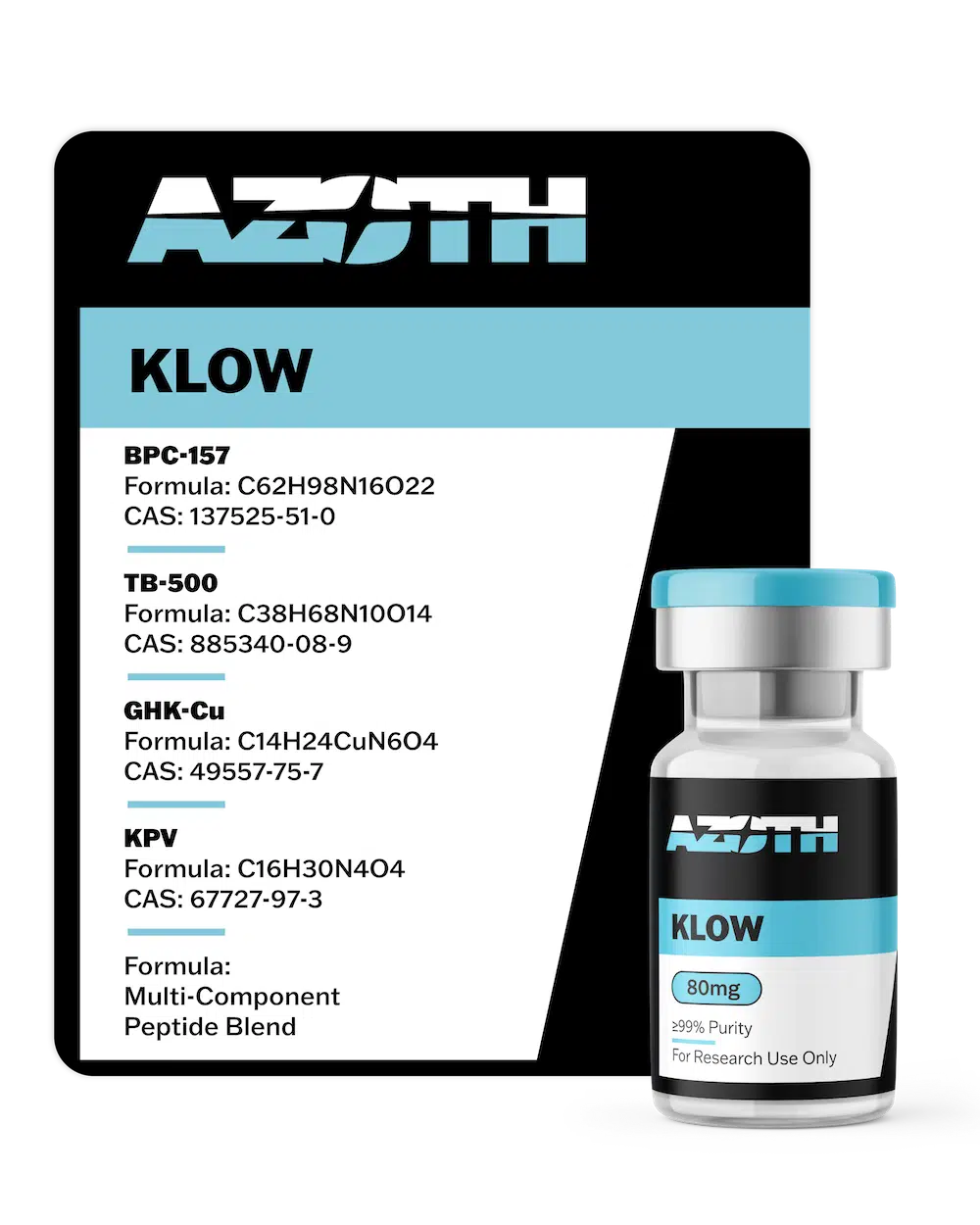
Research use only
All AZOTH products are intended solely for laboratory research, analytical, and scientific use. Products are not for human consumption, human use, veterinary use, diagnostic use, therapeutic use, or administration of any kind.