Ipamorelin Peptide | Selective Growth Hormone Secretagogue | AZOTH
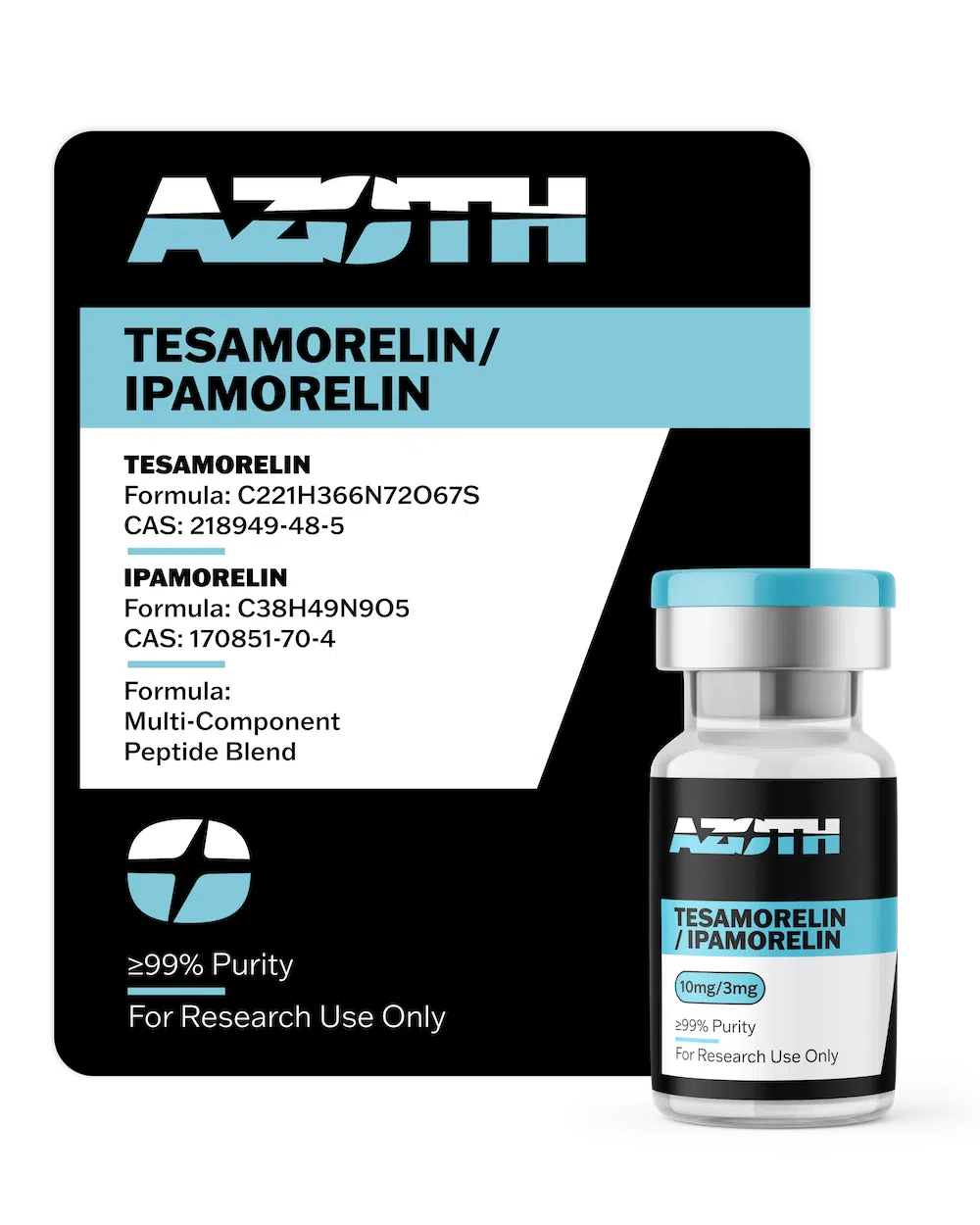
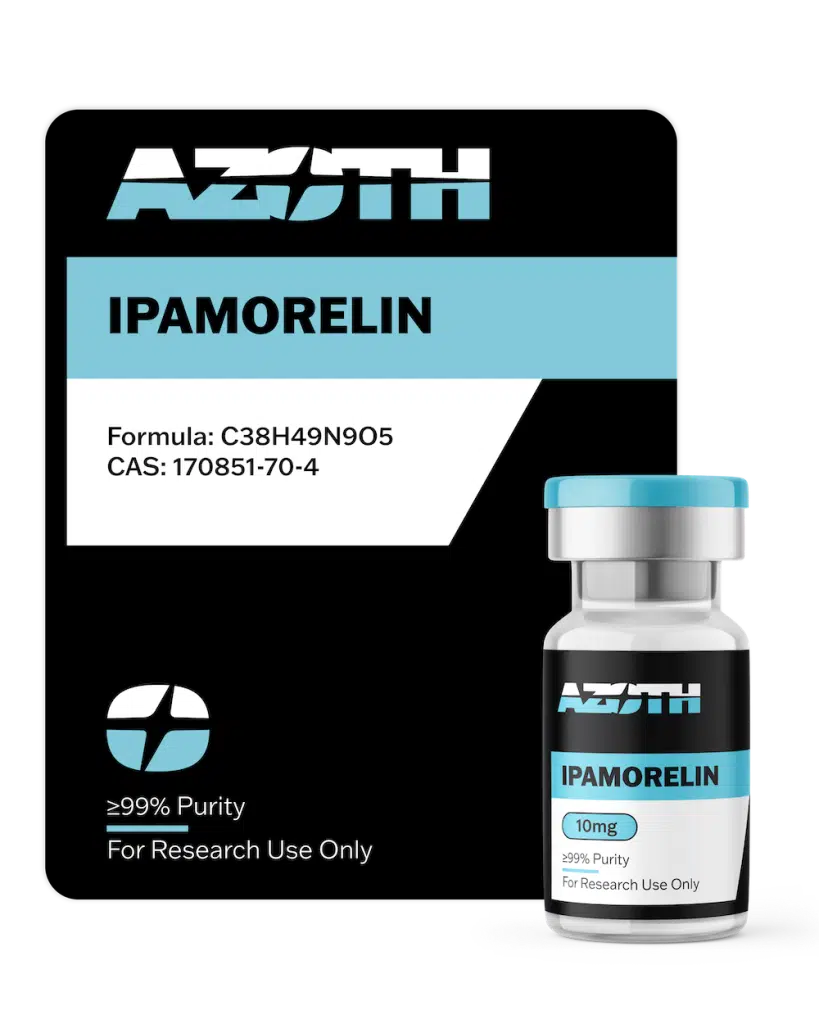
Ipamorelin is a synthetic pentapeptide built to stimulate growth hormone release in the body. Researchers classify it as a growth hormone secretagogue, a category of compounds designed to trigger the pituitary gland to release growth hormone without pulling in a wide range of other hormones. This is the trait that separates ipamorelin from older secretagogues studied in clinical research over the past three decades. AZOTH supplies laboratory-grade ipamorelin manufactured in the USA to 99%+ purity, intended exclusively for researchers and science-focused customers working within qualified research environments.
What Is Ipamorelin and Where Does It Come From?
Ipamorelin is derived from research into growth hormone releasing peptides conducted in the 1990s. Scientists were searching for a compound that could stimulate growth hormone secretion in humans without the broad hormonal side effects seen in earlier secretagogues. The result was a five amino acid sequence, including a phe lys pairing central to its receptor binding behavior, that binds selectively and produces a clean pulse of growth hormone. This selectivity is why ipamorelin continues to appear across scientific literature focused on growth hormone secretagogue research.
How Ipamorelin Works in the Body
Ipamorelin works by binding to ghrelin receptors located in the hypothalamus and pituitary gland. This binding mimics the natural action of ghrelin, the hormone responsible for triggering growth hormone release during fasting states and at night. Once bound, ipamorelin stimulates the pituitary gland to release growth hormone in a pulse that closely resembles the body’s own secretion pattern. Unlike growth hormone releasing hormone, which works through a separate receptor pathway, ipamorelin acts as a peptide selective agonist that narrows its effect mostly to the growth hormone axis. Researchers studying ipamorelin works have noted that this narrow action profile is what makes the compound useful for isolating growth hormone effects in animal models.
Why Ipamorelin Does Not Significantly Raise Cortisol or Prolactin
A defining feature discussed across ipamorelin research is its lack of meaningful effect on cortisol, prolactin, FSH, or ACTH levels. Older secretagogues often stimulate several hormone pathways at once, which makes it hard for researchers to isolate cause and effect. Ipamorelin’s highly selective binding profile allows growth hormone secretion to increase while other hormone levels stay largely unaffected. An international journal covering endocrinology described this selectivity as one of the reasons ipamorelin stood out compared to earlier growth hormone releasing hormone analogs tested in the same research period.