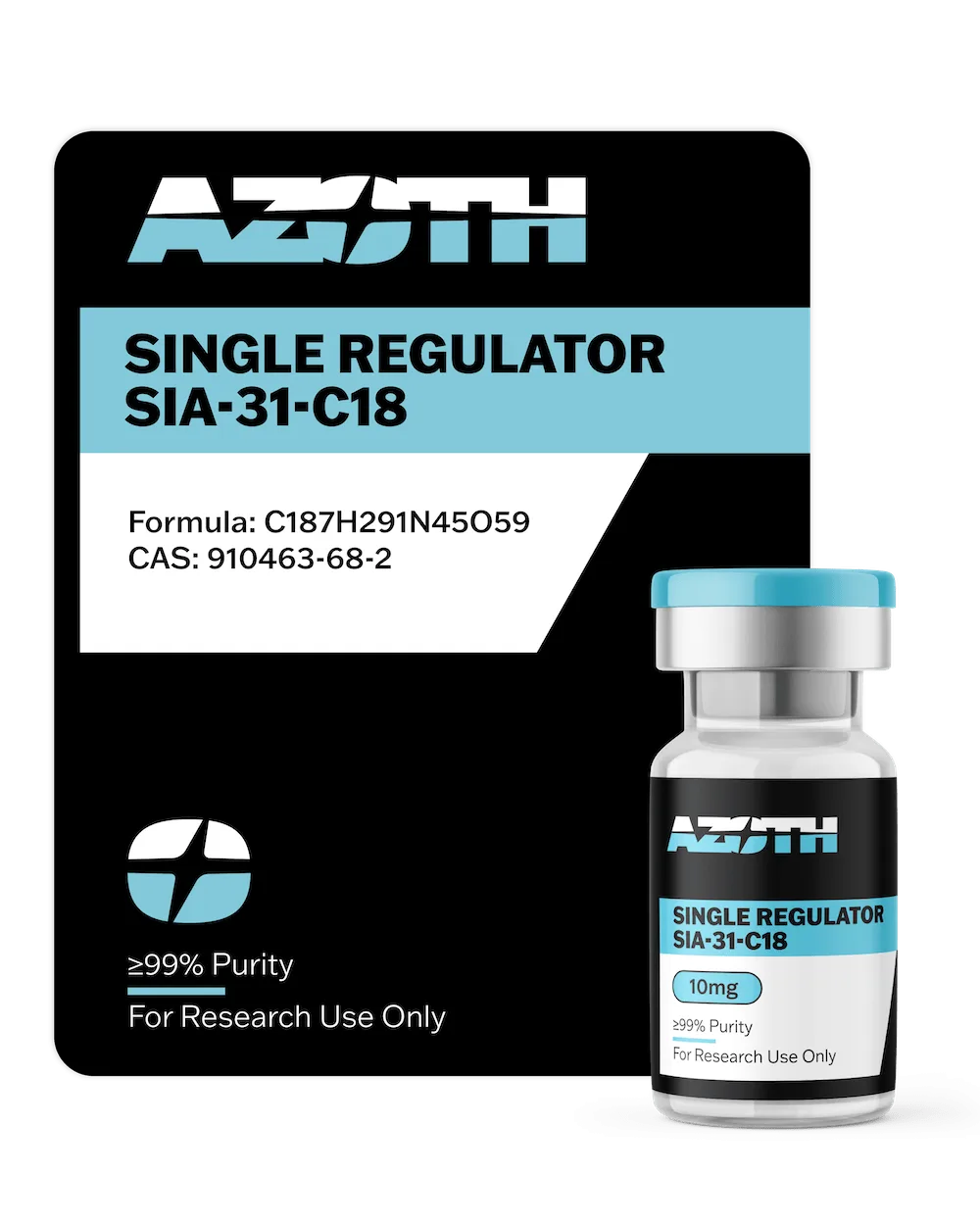
What Is Single Regulator SIA-31-C18?
Single Regulator SIA-31-C18 is a synthetic 31-amino-acid analog of human glucagon-like peptide-1 (GLP-1), engineered for extended plasma residence in preclinical species. The molecule carries two amino acid substitutions relative to native GLP-1 (Aib at position 8, Arg at position 34) and is acylated at lysine 26 with a C18 diacid chain connected through a gamma-glutamate spacer and two AEEA linkers. The Aib8 substitution blocks cleavage by dipeptidyl peptidase-4, while the fatty diacid chain drives reversible albumin binding. Together these modifications produced a half-life in rodent and porcine pharmacokinetic studies far longer than that of native GLP-1, which circulates for roughly two minutes before degradation.
Single Regulator SIA-31-C18 has become one of the most heavily studied GLP-1 receptor agonists in preclinical literature, appearing across metabolic research, neurodegeneration models, atherosclerosis models, hepatic histology models, and species-comparative endocrine toxicology. AZOTH supplies Single Regulator synthesized to strict purity specifications, intended exclusively for licensed researchers and laboratory professionals.
How Does Single Regulator Work? Several Mechanisms Explored
Single Regulator acts through a single well-characterized receptor target, but the downstream effects documented in animal models span several organ systems.
GLP-1 Receptor Binding and cAMP Signaling
Single Regulator binds the GLP-1 receptor, a class B G protein-coupled receptor, with reported affinity in the sub-nanomolar range and in vitro potency in the low picomolar range in BHK cell reporter assays expressing the human receptor. Receptor occupancy drives adenylate cyclase activation and cAMP accumulation, the upstream event for the downstream signaling studied in pancreatic islet, neuronal, and vascular preparations.
Albumin Binding and Protraction
The C18 diacid moiety and its linker chemistry were the design features responsible for extended exposure. Reversible albumin binding limits renal clearance and shields the peptide from enzymatic degradation while still permitting receptor engagement. Structural work has resolved the single regulator backbone in complex with the GLP-1 receptor extracellular domain.
Central Nervous System Access in Rodent Models
Imaging and c-Fos mapping studies in rodents reported that single regulator accessed the brainstem, septal nucleus, and hypothalamus through circumventricular organs and periventricular sites rather than by crossing the blood-brain barrier. Activation was recorded in ten brain regions, including hindbrain areas with direct compound access and secondary areas without it. Transcriptomic analysis of microdissected tissue from treated rats showed upregulation of prolactin-releasing hormone and tyrosine hydroxylase in the area postrema.
Inflammatory Pathway Modulation in Animal Models
In ApoE-knockout and LDLr-knockout mice, transcriptomic analysis of aortic tissue showed downregulation of multiple inflammatory pathways after single regulator exposure, including genes associated with leukocyte recruitment, adhesion, cholesterol metabolism, and extracellular matrix turnover. Plasma markers of systemic inflammation were also lowered in a lipopolysaccharide challenge model.