What Is PT 141? Understanding This FDA Approved Peptide
PT 141, also known as bremelanotide, is a synthetic peptide originally developed from a melanocortin-based compound family. Unlike traditional treatments for sexual dysfunction that target blood flow, PT 141 works differently by activating melanocortin receptors directly in the brain. This distinction has made PT 141 peptide one of the most discussed compounds in the field of sexual medicine over the past decade. Bremelanotide received FDA approval in June 2019, specifically as Vyleesi, making it a rare example of a peptide with a defined clinical pathway rather than research-only status.
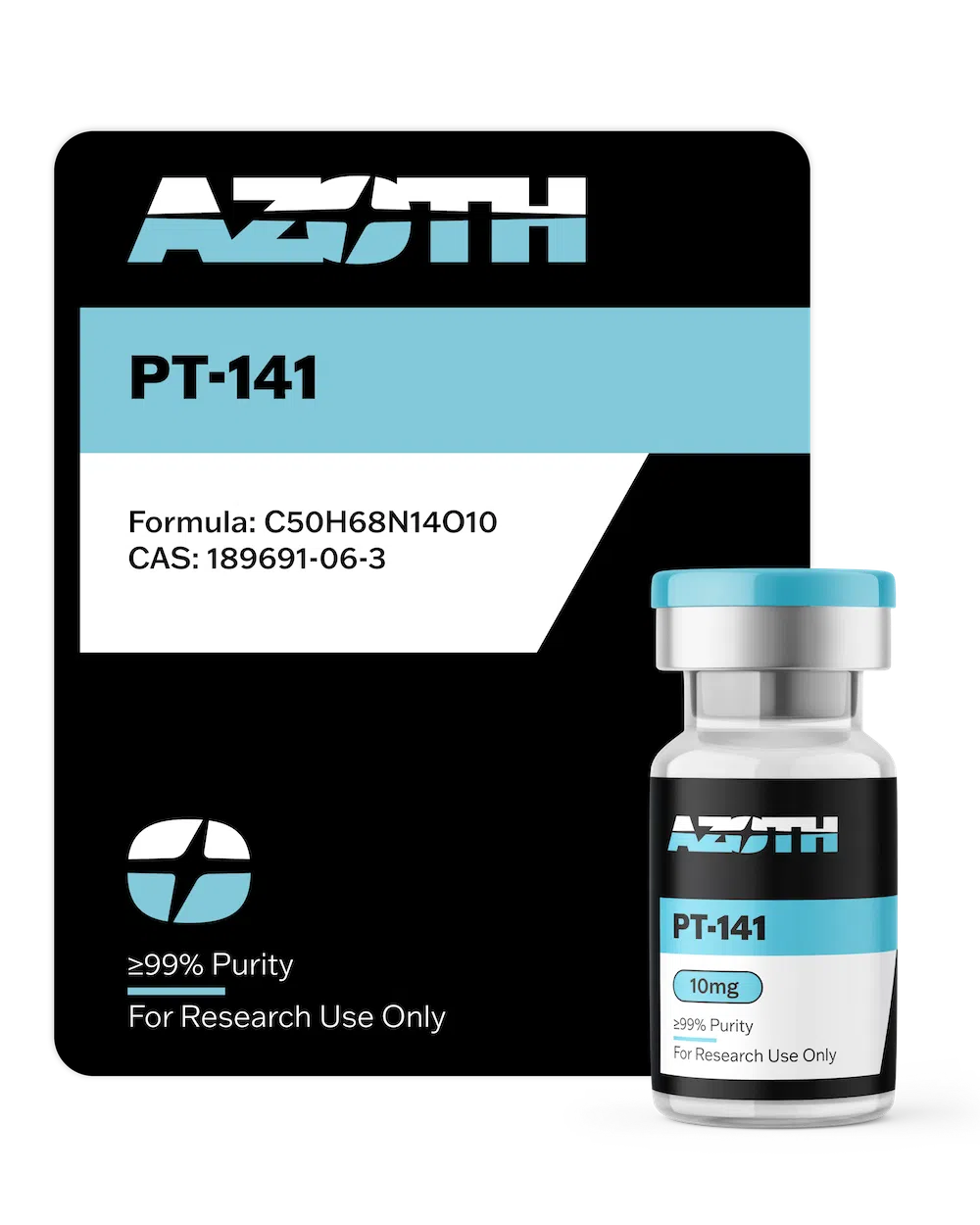
At AZOTH, we supply PT 141 synthesized to 99%+ purity, intended exclusively for researchers and science-focused customers studying its mechanisms and applications. The product ships as a lyophilized powder, is manufactured in the United States, and includes third-party Certificate of Analysis (COA) documentation for every batch. AZOTH positions this listing around the compound’s documented pharmacology, its regulatory history, and its role within ongoing sexual health research, not around consumer wellness claims.
How Does PT 141 Work? A Melanocortin Receptor Agonist
PT 141 functions as a melanocortin receptor agonist, meaning it binds to and activates specific receptors rather than working through the vascular system the way many older treatments do. Two receptor subtypes, MC3R and MC4R, appear central to its activity. These receptors sit within pathways of the central nervous system tied to arousal and sexual motivation, which is why PT 141 is often described as acting on desire itself rather than on the body’s plumbing.
This mechanism separates PT 141 peptide from medications like Viagra and Cialis. Viagra primarily improves blood flow to support erectile function, while PT 141 directly influences sexual desire by working through brain pathways. Researchers studying this distinction have noted that PT 141 does not require sexual stimulation to activate its pathway the way PDE5 inhibitors do, since its target sits upstream in the central nervous system rather than in blood vessels.
PT 141 and Hypoactive Sexual Desire Disorder (HSDD)
The primary indication studied for PT 141 is hypoactive sexual desire disorder, commonly abbreviated HSDD. This condition is characterized by persistently low sexual desire that causes distress, and it disproportionately affects premenopausal women. PT 141 is FDA approved for premenopausal women with HSDD, following extensive Phase 2 and Phase 3 trials that evaluated its effect on sexual desire disorder HSDD symptoms over time.
Clinical trials showed significant improvements in sexual desire among women using bremelanotide compared to placebo, with measurable gains recorded after 24 weeks of use. PT 141 increases sexual desire in premenopausal women according to this trial data, and researchers have documented modest but consistent improvements in both desire and associated distress scores. FDA approval requires extensive Phase 2 and Phase 3 trials, and bremelanotide’s approval on June 21, 2019 reflected years of accumulated data across multiple study sites.
PT 141 Peptide Specifications and Quality Standards
AZOTH’s PT 141 peptide is manufactured to strict specifications for researchers who require consistency across studies.
- Verified 99%+ purity via HPLC testing
- USA-manufactured under controlled laboratory protocols
- Third-party tested for identity, purity, and stability
- Lyophilized powder format for extended shelf stability
- Certificate of Analysis available for every batch
- Supplied for subcutaneous injection research applications only
The compound is also known as bremelanotide, a synthetic peptide originally derived from a precursor melanocortin compound. Reconstitution and administration protocols should follow standard laboratory practice for peptide research, with all handling conducted by qualified personnel.