What Is N-Acetyl Selank?
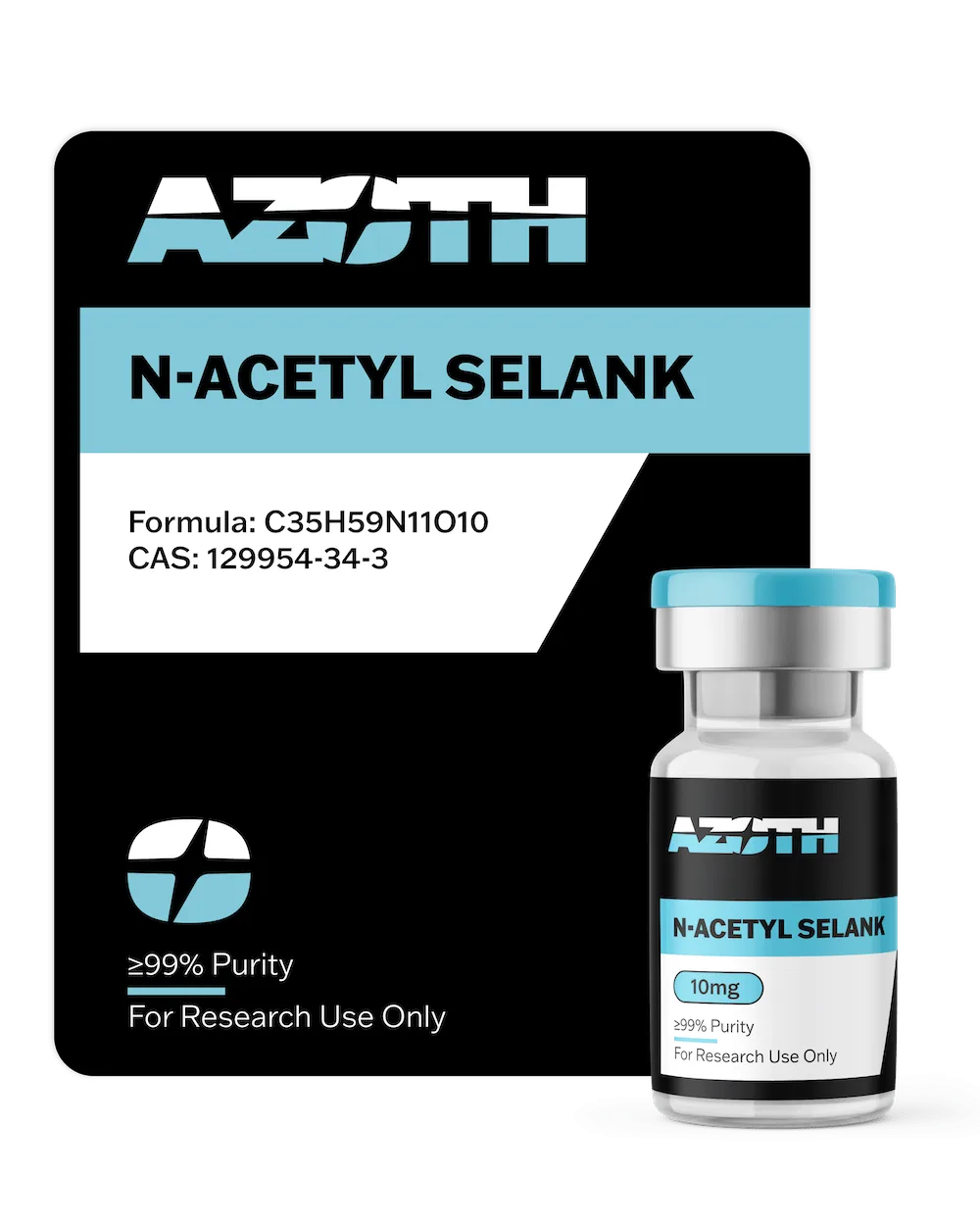
N-acetyl selank is a synthetic analog of selank, a heptapeptide selank derivative originally developed by researchers at the Institute of Molecular Genetics in Russia. Selank itself is a synthetic peptide based on the endogenous tuftsin fragment, sometimes described through its pro gly pro fragment structure, and unmodified selank was approved for human use in Russia in 2009 for generalized anxiety disorder under clinical study protocols. N-acetyl selank amidate represents a modified version of this heptapeptide selank, engineered with an additional acetyl group attached to the N terminus and c terminal amidation applied to the C terminus. This dual modification is the basis of the key differences researchers cite between n acetyl selank amidate and unmodified selank in preclinical literature. At AZOTH, N-acetyl selank amidate is manufactured to 99%+ purity and supplied as a lyophilized powder intended exclusively for laboratory and research use.
Why Was N-Acetyl Selank Amidate Developed?
Selank is susceptible to enzymatic degradation in vivo, largely due to the activity of enkephalin degrading enzymes that break down short peptide chains rapidly once introduced into biological systems. Researchers pursued n acetyl selank amidate as a synthetic analog specifically to address this enzymatic degradation. The n terminus acetylation and c terminal amidation modifications are hypothesized in available data to slow the rate of enzymatic degradation, giving acetyl selank amidate enhanced stability relative to native selank in research models. This enhanced stability is one of the primary research interests separating n acetyl selank from earlier heptapeptide selank formulations.
How Does N-Acetyl Selank Amidate Differ From Selank?
The key differences between n acetyl selank and unmodified selank center on structural modification rather than a change in the core amino acid sequence. Selank amidate retains the same heptapeptide selank backbone, but the additional acetyl group and c terminal amidation are believed to alter how the peptide appears to enzymatic systems in vitro and in murine models. Researchers studying acetyl selank amidate suggest these structural changes may extend half-life and improve resistance to breakdown in human serum and other biological matrices, though available data on this remains preclinical.
Selank Research Background and Zozulia AA Studies
Early selank research, including work published by Zozulia AA and colleagues, examined the heptapeptide selank’s anxiolytic action in research models. This body of selank research laid the groundwork for later investigation into n acetyl selank amidate as a next-generation synthetic peptide. Findings from these studies have appeared in publications such as Doklady Biological Sciences, within the biological sciences sections covering neuropeptide research, and continue to inform how researchers frame n acetyl selank amidate today.
Related
N-Acetyl Selank Amidate Research Applications
Researchers studying n acetyl selank amidate typically explore its relevance across a small number of well-defined research categories: anxiolytic action, cognitive function, and central nervous system signaling in animal and in vitro research models.
Anxiolytic Action in Research Models
Peptide anxiolytic selank research has long focused on how the heptapeptide selank interacts with GABAergic system signaling. In murine models, selank administration has been studied for its capacity to regulate mood through modulation of an inhibitory neurotransmitter pathway associated with the GABAergic system. N-acetyl selank amidate is being studied as a synthetic peptide that may enhance stability against enzymatic degradation, and researchers hypothesize this could translate to a more consistent anxiolytic action profile across research settings. Selank inhibit activity on certain enzymatic pathways associated with enkephalin breakdown has also been proposed as a contributing mechanism.
Cognitive Function and Memory Processes
A separate area of selank research examines its relevance to cognitive function and learning and memory processes. Studies in rat hippocampus tissue have looked at brain derived neurotrophic factor pathways, with some research models showing changes in BDNF expression following selank administration. Researchers interested in memory consolidation and general cognitive performance continue to reference selank peptide studies exploring these pathways, though this remains an area of ongoing preclinical investigation rather than an established outcome.
Central Nervous System and Neurotransmitter Research
Because selank crosses the blood brain barrier, research models have used it to examine central nervous system signaling more broadly, including serotonin metabolism and serotonin signaling pathways. Some research has proposed effects on neuronal excitability and pain perception, alongside preliminary interest in immunomodulatory effects tied to peptide administration. N-acetyl selank amidate is being examined as a tool for extending the observation window in these research settings due to its proposed enhanced stability.
Intranasal Administration in Research Settings
Selank peptide research has frequently used intranasal administration and nasal spray delivery formats in animal studies, citing rapid onset of measurable effects compared to other delivery routes. Intranasal use has also been studied in the context of opioid receptors and pain perception research, though this remains a narrow slice of the broader selank literature. N-acetyl selank amidate researchers continue to reference intranasal administration as a common protocol in murine models.
Research Summary: What the Preclinical Science Shows on N-Acetyl Selank
The available data on n acetyl selank amidate builds on decades of selank research, much of which originates from Russian molecular genetics and neuropeptide laboratories. Below is a summary of key research areas relevant to acetyl selank and its modified counterpart.
Selank was approved for generalized anxiety disorder and related anxiety asthenic disorders in Russia in 2009, based on clinical studies showing high tolerability and no toxicity across one month of administration at regular intervals. Outside Russia, n acetyl selank amidate is not authorized for human use and is sold strictly for research purposes. Limited clinical trials data exist internationally, and reported adverse effects in early human studies of the unmodified peptide included headaches and nasal irritation following intranasal administration. Long-term selank use has also been associated in some research with potential GABAergic system desensitization, underscoring why researchers emphasize that available data remains incomplete for acetyl selank amidate specifically.
Why Researchers Choose AZOTH for N-Acetyl Selank Amidate
Product consistency matters when working with a synthetic peptide as structurally sensitive as n acetyl selank amidate. AZOTH manufactures this compound to strict purity specifications, backed by third-party certificate of analysis documentation for every batch.
- Verified 99%+ purity via HPLC testing
- USA-manufactured under strict quality protocols
- Third-party tested for identity, purity, and stability
- Lyophilized powder format for maximum shelf stability
- Certificate of Analysis available for every batch
Whether the research focus is anxiolytic action, cognitive function pathways, or CNS-related neuropeptide signaling, AZOTH provides the acetyl selank amidate quality that laboratory research demands, positioned for researchers and science-focused customers rather than general consumers.
Storage and Handling
N-acetyl selank amidate is supplied in lyophilized (freeze-dried) powder form. Store at 2-8°C in a cool, dry environment away from direct light and moisture. After reconstitution with bacteriostatic water, keep refrigerated and use in accordance with laboratory research protocol. Stability is maintained for an extended period when stored correctly in lyophilized form.
Legal Disclaimer
N-acetyl selank amidate sold by AZOTH is intended for laboratory and in vitro research use only. It is not approved by the Food and Drug Administration (FDA) for human consumption, medical use, diagnostic procedures, or veterinary use. This product has not been evaluated by the FDA and is not intended to diagnose, treat, cure, or prevent any disease or medical condition. Bodily introduction of any kind into humans or animals is strictly prohibited by law. All purchasers must be licensed researchers or qualified laboratory professionals.