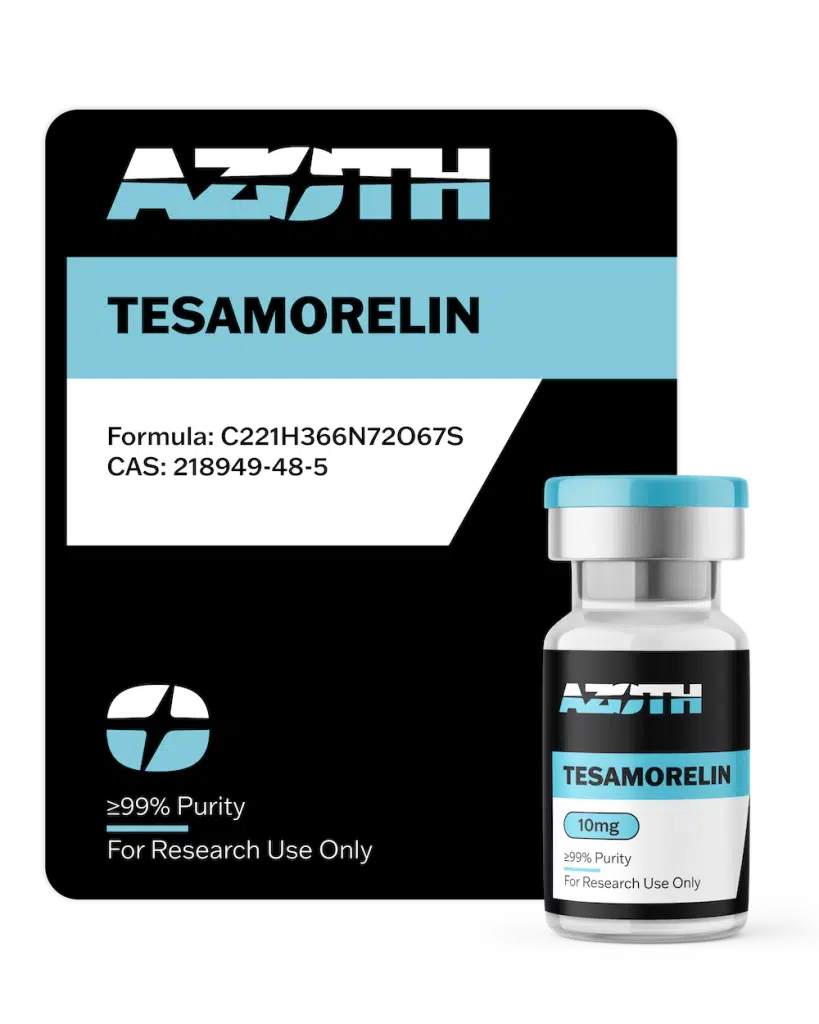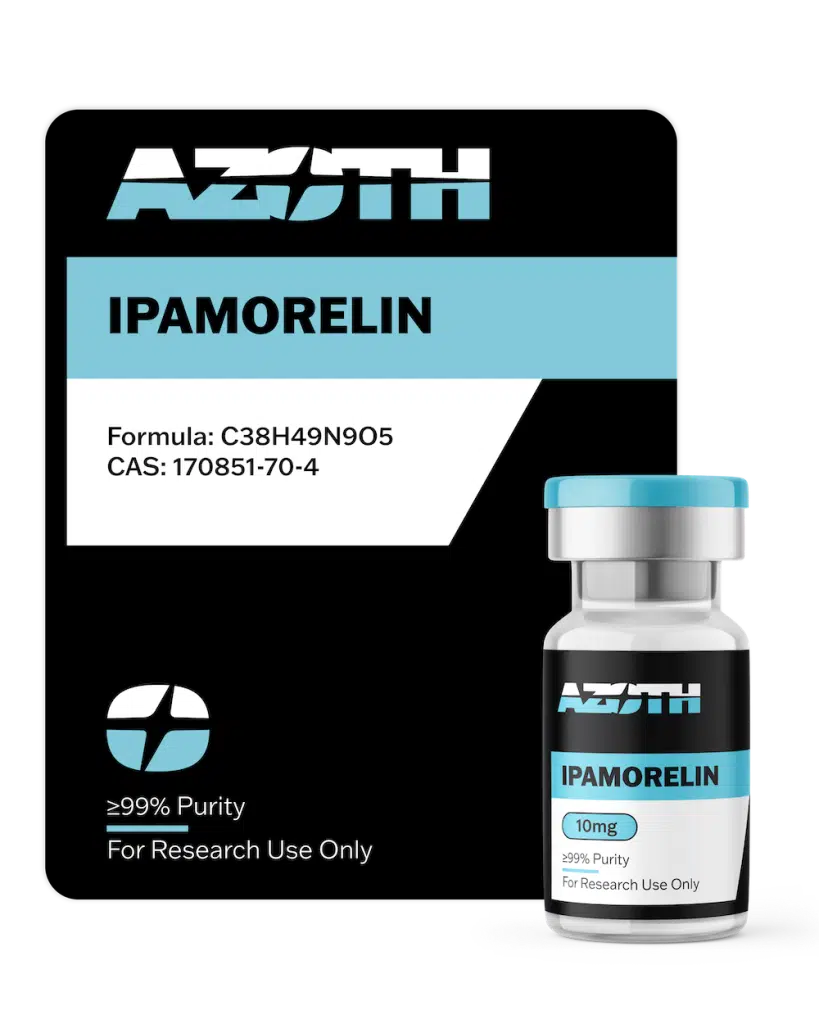
Third-Party Tested
Independent Lab Review
Per-Batch COA
Lot-Specific Documentation
≥99% Purity
Research-Grade Standard
COA Verified
Chromatography + ILS Supported
SKU
AZ-GHRP6-10

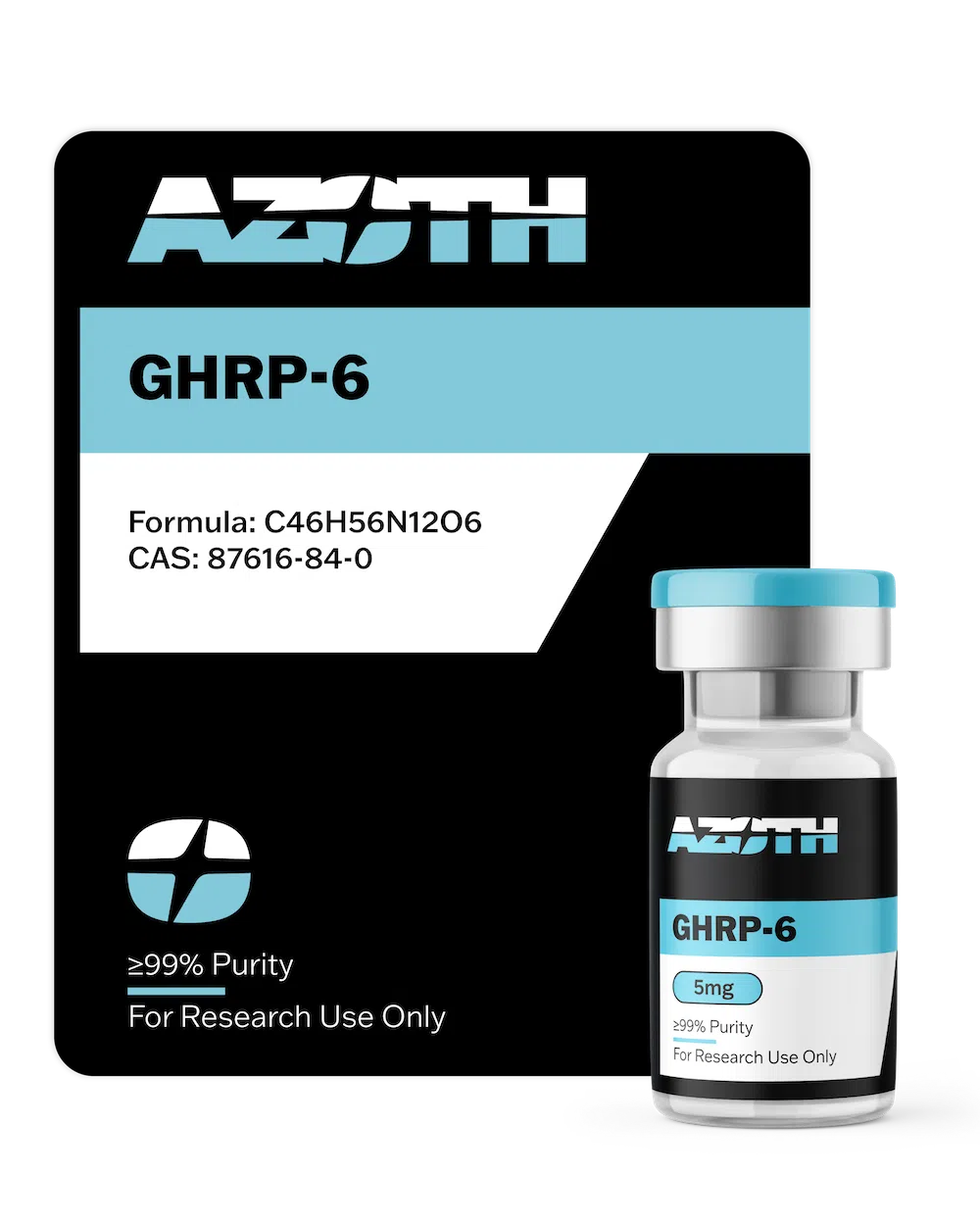
GHRP-6 5mg

Third-Party Tested
Per-Batch COA
HPLC Verified
≥99% Purity
Pricing

In stock

Fulfillment Timing Based on Inventory and Account Status.

GHRP-6 5mg
HPLC Certified
CAS #
87616-84-0
M.W.
872.4
Formula
C46H56N12O6
RUO
Specs:

GHRP-6 Peptide | 99% Purity USA-Made | AZOTH

What Is GHRP-6?

GHRP-6 is a synthetic met enkephalin analog studied for its ability to trigger growth hormone release from the pituitary gland. This growth hormone releasing peptide belongs to a class of compounds known as growth hormone secretagogues, molecules that stimulate gh secretion through a receptor pathway distinct from natural growth hormone releasing hormone. GHRP-6 is built from six amino acids, arranged around a core sequence containing d amino acids that give this growth hormone releasing peptide its stability. Because of this structure, GHRP-6 is often described as a growth hormone releasing hexapeptide or a synthetic hexapeptide within clinical endocrinology literature.

Researchers and science-focused customers studying GHRP-6 are drawn to its consistent, measurable effect on gh release. AZOTH supplies this growth hormone releasing peptide as a lyophilized powder manufactured in the USA to 99%+ purity, with every batch backed by third-party Certificate of Analysis documentation. GHRP-6 is intended exclusively for licensed researchers and qualified laboratory professionals working within a controlled research setting, and it is not approved for human consumption.

GHRP-6 Structure, Molecular Formula, and Molecular Weight

Understanding the molecular formula and molecular weight of GHRP-6 is a starting point for any laboratory protocol involving this growth hormone releasing peptide. GHRP-6 carries a molecular formula of C46H56N12O6, and its molecular weight is documented at 873.032 g/mol. The CAS number for GHRP-6 is 87616-84-0, a reference researchers use to confirm identity against Certificate of Analysis, HPLC, and mass spectrometry testing.

The molecular weight of GHRP-6 also matters when researchers calculate concentrations for reconstitution or compare this growth hormone releasing peptide against other growth hormone secretagogues. Because GHRP-6 is one of several synthetic peptides built from a defined amino acid sequence, its molecular weight remains consistent from batch to batch when manufacturing controls are followed. AZOTH documents molecular weight, along with CAS and formula data, directly on the Certificate of Analysis provided with each order of GHRP-6.

How GHRP-6 Interacts With the Ghrelin Receptor

GHRP-6 activates the ghrelin receptor, formally known as the growth hormone secretagogue receptor, located on pituitary somatotrophs. Ghrelin receptor activation by GHRP-6 mirrors the action of endogenous ghrelin, the body’s natural growth hormone secretagogue, and this shared pathway is why GHRP-6 is frequently studied alongside ghrh analogs in growth hormone releasing hormone research. Pituitary somatotrophs respond to GHRP-6 by increasing intracellular calcium, a mechanism connected to marked somatotroph secretory capability and subsequent gh release from these same pituitary somatotrophs.

Preclinical literature describes peak GH levels occurring within 15 to 30 minutes of GHRP-6 administration, with the resulting GH pulse lasting approximately 60 to 90 minutes. This gh response is distinct from the slower, sustained pattern associated with gh releasing hormone alone, and researchers often examine the two growth hormone releasing pathways side by side. Ghrelin receptor signaling connected to GHRP-6 also extends beyond growth hormone production, since ghrelin itself is tied to appetite regulation, glucose metabolism, and broader metabolism research relevant to individuals seeking to understand secretagogue pathways.

GHRP-6 and Growth Hormone Secretion Research

The central research application for GHRP-6 involves growth hormone secretion from the pituitary gland. Studies in clinical endocrinology use this hormone releasing peptide 6 to measure how reliably pituitary somatotrophs respond to growth hormone secretagogue receptor stimulation compared with gh releasing hormone alone. Because GHRP-6 produces a strong, repeatable gh secretion pattern, this growth hormone releasing peptide remains a reference compound in growth hormone releasing research published in journals including the European Journal of Endocrinology and J Clin Endocrinol Metab.

Some published protocols describe massive growth hormone spikes following hormone releasing peptide 6 administration in research settings, particularly when GHRP-6 is studied in combined administration with GHRH analogs. Combined administration research explores whether growth hormone releasing activity is amplified when a growth hormone secretagogue receptor agonist like GHRP-6 is paired with a compound acting directly on gh releasing hormone receptors. This growth hormone releasing hexapeptide’s secretion profile makes GHRP-6 useful for isolating receptor-specific effects tied to growth hormone release in laboratory models, and hormone releasing peptide 6 research continues to expand across clinical endocrinology journals.

Growth Hormone, Body Composition, and Muscle Growth Research

Growth hormone gh production and hormone releasing peptide 6 output are closely linked to body composition and muscle growth research, since growth hormone and its downstream mediator IGF-1 influence protein synthesis in animal models. Researchers studying GHRP-6 have examined whether this growth hormone releasing peptide’s activity correlates with measurable shifts in body composition, including changes relevant to fat loss and lean tissue in obese subjects studied in controlled settings. These findings remain within a preclinical research category rather than an established outcome for human use, and hormone releasing peptide 6 studies in this area are ongoing.

Because GH and IGF-1 pathways intersect with protein synthesis, GHRP-6 research has also touched on muscle growth in the context of recovery science, though this connection is studied strictly at the level of growth hormone secretion and cellular signaling. Metabolism research tied to GHRP-6 additionally covers lipid metabolism and glucose metabolism, since ghrelin receptor activation influences energy regulation independent of the classic growth hormone axis. Elevated blood glucose has been observed in some models following growth hormone secretagogue exposure, and growth factors downstream of gh release remain an active area of metabolism-focused literature.

GHRP-6 in Cardioprotective and Tissue Research

A distinct area of GHRP-6 research involves cardioprotective effects observed in models of acute myocardial infarction. Preclinical studies in porcine models found that GHRP-6 reduced myocardial necrosis by limiting oxidant cytotoxicity following induced cardiac injury, a mechanism separate from its pituitary-driven growth hormone release. This cardioprotective research suggests GHRP-6’s ghrelin receptor activity extends into cardiac tissue signaling, not solely into growth hormone production at the pituitary gland, and hormone releasing peptide 6 studies in this space continue to draw research interest.

Additional animal model research has examined GHRP-6 in wound closure and extracellular matrix regulation, an area researchers describe as a research category rather than a therapeutic outcome. Investigators studying the endoplasmic reticulum stress response in various cell types have also referenced ghrelin receptor pathways as a point of interest, connecting GHRP-6 research to broader cellular stress literature and to ongoing questions about overall vitality markers observed only in preclinical animal contexts.

Dosing References From Published Literature

Published research literature typically administered GHRP-6 at doses around 100 mcg once or twice daily using subcutaneous injection delivered with an insulin syringe. Researchers preparing this synthetic peptide for laboratory use are advised to work with a single sterile syringe per administration event to protect solution integrity throughout the protocol. Some protocols reference oral administration of GHRP-6, since this growth hormone releasing peptide shows moderate bioavailability by that route in animal models, though subcutaneous injection remains the more studied path for delivering hormone releasing peptide 6 in research chemical literature.

Higher doses of GHRP-6, generally above 1 mcg/kg, have been associated with elevated cortisol and prolactin elevation in some models, and researchers have documented prolactin levels rising alongside growth hormone gh output at these doses. Reconstituted solution should reach room temperature before use, and researchers should allow the vial to warm gradually rather than applying direct heat. GHRP-6’s saturation point is described in the literature as approximately 1 mcg/kg, beyond which additional GH secretion plateaus regardless of dose increases, a detail relevant to anyone comparing GHRP-6 with other gh secretagogues used in competitive sports research contexts. Reported injection site reactions in preclinical models include mild water retention near injection sites, and consistent use across some protocols has been linked to receptor desensitization over time.

What the Preclinical Science Shows

The research base surrounding GHRP-6 spans clinical endocrinology, metabolism research, and cardioprotective science. Below is a summary of key preclinical findings drawn from published literature on this growth hormone releasing peptide.

Research Area Model Key Findings
Growth Hormone Secretion Pituitary somatotroph models GHRP-6 stimulates gh release via growth hormone secretagogue receptor activation, with GH pulses peaking within 15-30 minutes
Ghrelin Receptor Signaling Rodent and pituitary models Confirms ghrelin receptor activation distinct from gh releasing hormone and ghrh analogs pathways
Cardioprotection Porcine myocardial infarction models Reduced myocardial necrosis and oxidant cytotoxicity following acute myocardial infarction
Metabolism and Glucose Regulation Rodent metabolic models Ghrelin receptor activation linked to glucose metabolism and lipid metabolism shifts, with elevated blood glucose observed in some models
Body Composition Animal models, obese subjects Growth hormone and IGF-1 pathway activity associated with body composition and protein synthesis changes
Tissue and Cellular Research Animal wound and cell models Wound closure, extracellular matrix regulation, and endoplasmic reticulum stress response referenced in ghrelin receptor literature

Storage and Handling for Hormone Releasing Peptide 6

GHRP-6 is supplied by AZOTH in lyophilized powder form for long term storage stability. Store the peptide at 2 to 8 degrees Celsius, away from light and moisture, and reconstitute using bacteriostatic water only when preparing for laboratory use. After reconstitution with bacteriostatic water, keep the solution refrigerated and follow your laboratory research protocol for use timelines; unreconstituted GHRP-6 in lyophilized form maintains stability for extended periods under correct storage conditions.

Every vial of GHRP-6 sold by AZOTH ships with a Certificate of Analysis confirming purity and identity through HPLC and mass spectrometry testing, alongside documented molecular weight and CAS data. This documentation gives researchers and science-focused customers a clear record of product specifications before any laboratory research protocol involving this peptide begins.

Why Researchers Choose AZOTH for GHRP-6

Product consistency matters in laboratory research, and AZOTH manufactures GHRP-6, also known as hormone releasing peptide 6, to strict purity specifications with documentation for every batch. Researchers and science-focused customers receive verified 99%+ purity confirmed through HPLC and mass spectrometry testing, USA-based manufacturing under controlled protocols, and a Certificate of Analysis with every order of this growth hormone releasing peptide. Whether the research focus is growth hormone secretion, ghrelin receptor signaling, or cardioprotective mechanisms tied to acute myocardial infarction models, AZOTH provides the compound quality laboratory research involving GHRP-6 demands.

Legal Status and Research Use Disclaimer

GHRP-6 sold by AZOTH is intended for laboratory and in vitro research use only and is not fda approved for human consumption, medical use, diagnostic procedures, or veterinary use. GHRP-6 is prohibited by the World Anti-Doping Agency and is classified as a Schedule 4 substance in Australia, restricting its use in competitive sports settings, though possession of this research chemical is not criminalized under U.S. federal law. Selling GHRP-6 for human use is strictly prohibited, and all purchasers must confirm they are licensed researchers or qualified laboratory professionals operating within a compliant clinical research environment.

Anyone with questions about applicable regulations in their jurisdiction should consult a healthcare provider or legal counsel before beginning any research protocol involving GHRP-6, other synthetic peptides, or additional growth hormone secretagogues. AZOTH does not provide medical advice, and all product information related to this growth hormone releasing peptide is intended strictly for research and educational purposes.

Referenced Citations

Research Findings Journal Data Source Link
1. Huang CC, et al. “Acute food deprivation enhances fear extinction but inhibits long-term depression in the lateral amygdala via ghrelin signaling.” Neuropharmacology 2016; 101:36-45 pubmed.ncbi.nlm.nih.gov
2. Beheshti S, Shahrokhi S. “Blocking the ghrelin receptor type 1a in the rat brain impairs memory encoding.” Neuropeptides 2015; 52:97-102 pubmed.ncbi.nlm.nih.gov
3. Tóth K, et al. “Role of intraamygdaloid acylated-ghrelin in spatial learning.” Brain Res. Bull. 2010; 81(1):33-37 pubmed.ncbi.nlm.nih.gov
4. Subirós N, et al. “Assessment of dose-effect and therapeutic time window in preclinical studies of rhEGF and GHRP-6 coadministration for stroke therapy.” Neurol. Res. 2016; 38(3):187-195 pubmed.ncbi.nlm.nih.gov
5. Spencer SJ, et al. “The Role of Ghrelin in Neuroprotection after Ischemic Brain Injury.” Brain Sci. 2013; 3(1):344-359 pubmed.ncbi.nlm.nih.gov
6. Suda Y, et al. “Down-regulation of ghrelin receptors on dopaminergic neurons in the substantia nigra contributes to Parkinson’s disease-like motor dysfunction.” Mol. Brain 2018; 11(1):6 pubmed.ncbi.nlm.nih.gov
7. Mendoza Marí Y, et al. “Growth Hormone-Releasing Peptide 6 Enhances the Healing Process and Improves the Esthetic Outcome of the Wounds.” Plastic Surgery International 2016 hindawi.com
8. Fernández-Mayola M, et al. “Growth hormone-releasing peptide 6 prevents cutaneous hypertrophic scarring: early mechanistic data from a proteome study.” Int. Wound J. 2018; 15(4):538-546 pubmed.ncbi.nlm.nih.gov
9. Berlanga J, et al. “Growth-hormone-releasing peptide 6 (GHRP6) prevents oxidant cytotoxicity and reduces myocardial necrosis in a model of acute myocardial infarction.” Clin. Sci. Lond. Engl. 1979 2007; 112(4):241-250 pubmed.ncbi.nlm.nih.gov
10. Hyland L, et al. “Central ghrelin receptor stimulation modulates sex motivation in male rats in a site dependent manner.” Horm. Behav. 2018; 97:56-66 pubmed.ncbi.nlm.nih.gov
11. Korbonits M, Grossman AB. “Growth Hormone-Releasing Peptide and Its Analogues.” Trends in Endocrinology & Metabolism 1995; 6(2):43-49 via clinical endocrinology review literature
12. Huang HJ, et al. “The protective effects of Ghrelin/GHSR on hippocampal neurogenesis in CUMS mice.” Neuropharmacology 2019 pubmed.ncbi.nlm.nih.gov
Research use only

All AZOTH products are intended solely for laboratory research, analytical, and scientific use. Products are not for human consumption, human use, veterinary use, diagnostic use, therapeutic use, or administration of any kind.