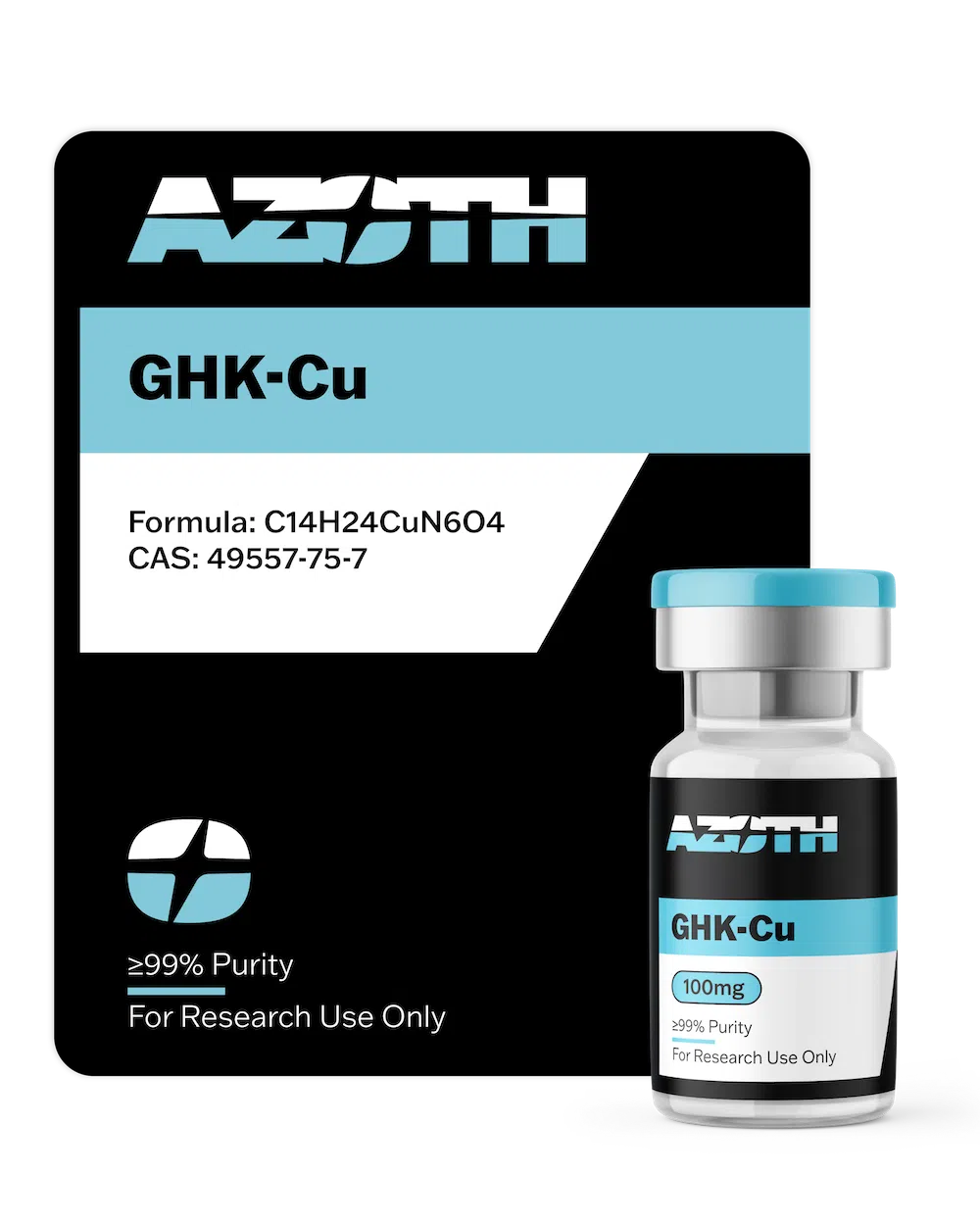
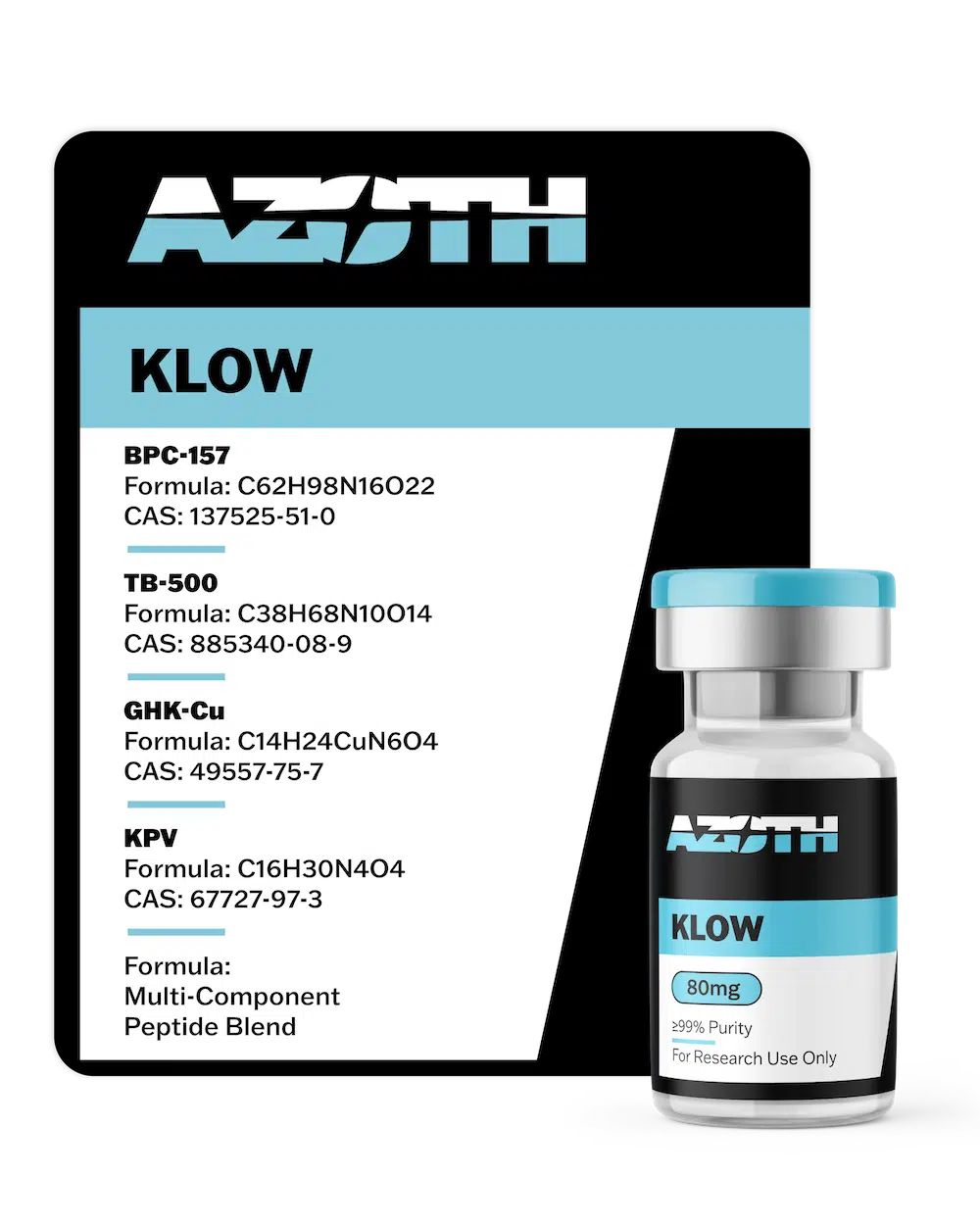
GHK-Cu is the copper complex of the naturally occurring tripeptide glycyl-L-histidyl-L-lysine (GHK). The histidine-containing peptide coordinates Cu(II), producing a metal-peptide complex whose analytical behavior depends on peptide identity, copper stoichiometry, pH, ionic environment, and other controlled laboratory conditions.
Because GHK-Cu is a coordination complex rather than an unmodified peptide alone, scientific characterization should address both the peptide and metal-associated state.
Scientific / Analytical Profile
- Peptide sequence: Gly-His-Lys (GHK)
- Class: copper(II)-peptide coordination complex
- Key scientific feature: metal-ligand coordination involving the GHK peptide
- Analytical focus: peptide identity, copper content/stoichiometry, complex stability, purity, and oxidation state
- Research status: laboratory reagent; not a cosmetic or personal-use product
Batch-specific identity, purity, and analytical results should be confirmed against the applicable Certificate of Analysis and lot documentation.
Research Use Only. This material is intended solely for controlled laboratory, analytical, and scientific research. It is not for human or veterinary use or administration, diagnosis, treatment, prevention, cosmetic use, food use, or personal use.
GHK-Cu is suited to controlled studies of metal-peptide coordination chemistry, analytical behavior, and non-clinical biochemical interactions.
- HPLC/LC-MS characterization of the peptide component
- Copper-content and metal-to-peptide stoichiometry assessment using validated elemental or spectroscopic methods
- UV-visible or other spectroscopic evaluation of coordination behavior
- Complex-stability studies across defined pH, ionic-strength, or storage conditions
- Comparison of apo-GHK and copper-complexed GHK in controlled laboratory systems
- Analytical method validation, impurity profiling, and lot-to-lot comparison
Experimental design, controls, concentrations, assay conditions, and analytical methodology should be established by qualified researchers using validated laboratory procedures.
GHK-Cu is scientifically distinct from GHK because copper coordination changes the chemical system being studied. Reproducible research therefore requires attention to peptide identity, copper stoichiometry, complex formation, solution conditions, and stability.
Research Use Only. This material is intended solely for controlled laboratory, analytical, and scientific research. It is not for human or veterinary use or administration, diagnosis, treatment, prevention, cosmetic use, food use, or personal use.